Quick Links: About Us - Contact Us
For bookings, call us at
+501 677-2900
Quick Links: About Us - Contact Us

Quick Links: About Us - Contact Us
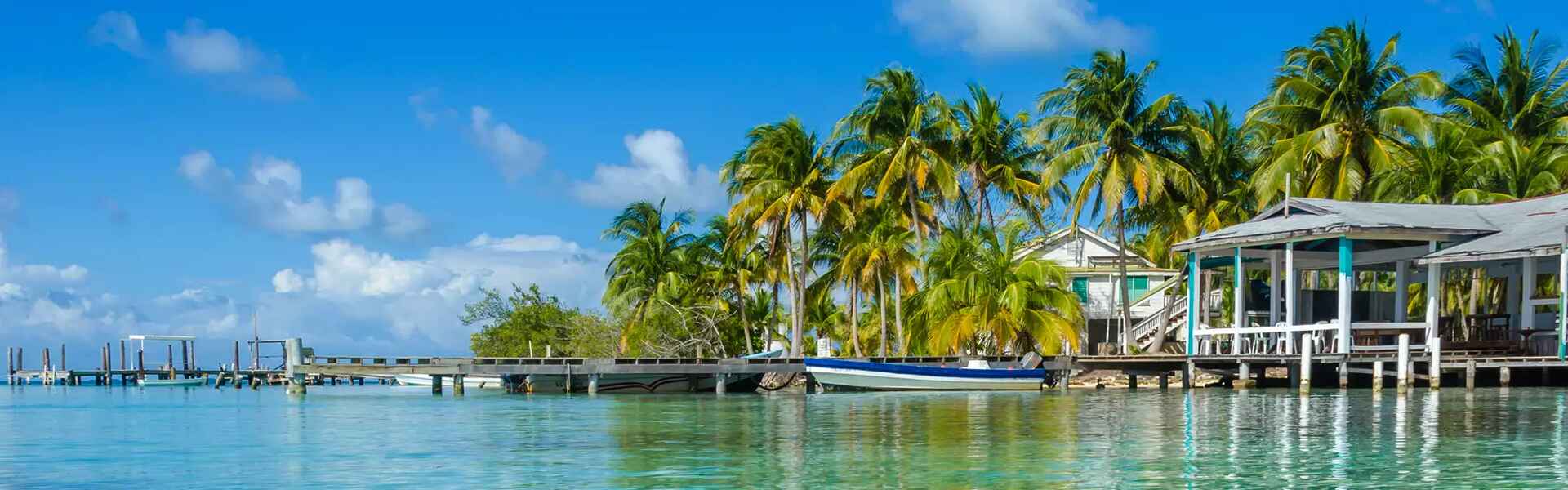

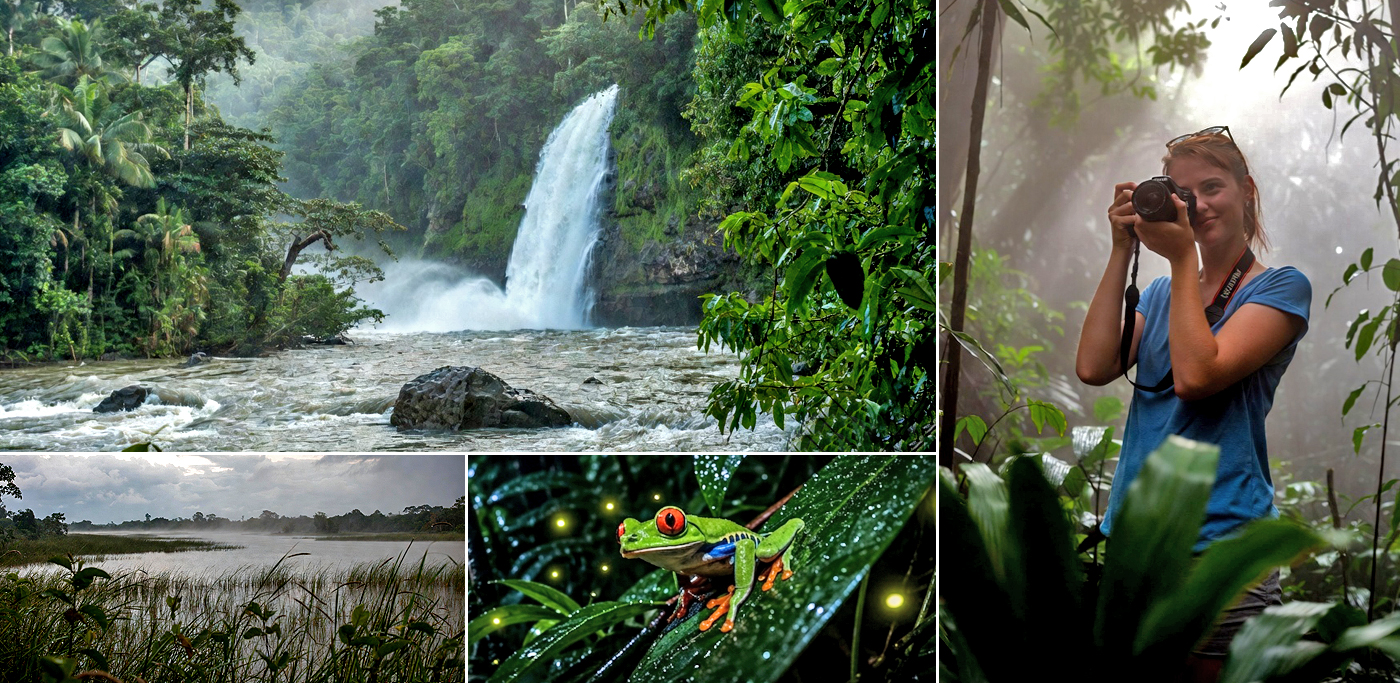
Photographers who’ve only shot Belize in the dry season are missing one of the most visually extraordinary experiences available anywhere in Central America. The early rains of April-May transform the country’s landscapes in ways that standard dry-season travel photography simply cannot capture—deeper greens, swollen waterfalls, mist-threaded jungle canopies, reflective lagoon surfaces, and the dramatic atmospheric light that overcast skies uniquely provide.
Here are seven locations that become genuinely spectacular photography subjects in Belize’s rainy season conditions.
Big Rock Falls is arguably the single most photogenic location in all of Belize and after rain, when the falls’ volume doubles or triples, it becomes extraordinary. The white water cascading 30 meters into an azure pool surrounded by granite boulders and palm trees is a composition that essentially photographs itself.
Camera settings: Use a circular polarizer to cut surface glare on the pool and saturate the surrounding green. Slower shutter speeds (1/4–1/2 second) in the reduced light of overcast conditions create silky waterfall movement while retaining sharp foreground detail. The best light is in the early morning, before the clearing sky introduces harsh midday contrast.
The morning after rain at Crooked Tree Wildlife Sanctuary is one of the most atmospheric photography opportunities in Belize. Mist rises from the still, glass-like lagoon surface as waterbirds take their first flights of the day—Roseate Spoonbills, Great Blue Herons, and occasionally Jabiru Storks silhouetted against a sky that ranges from deep blue-black to salmon pink in the 30 minutes around sunrise.
A boat positioned quietly in the lagoon before first light gives the best composition—birds in flight against the misted far shore, with perfect reflections on the undisturbed water surface. Contact Crooked Tree’s community guides for pre-dawn boat access; cost approximately USD 40–60 per person.
The mature broadleaf forest canopy of Cockscomb Basin Wildlife Sanctuary in light rain is among the most dramatically beautiful natural scenes in Belize. Rainwater cascades from leaf to leaf in curtains, the green intensifies to an almost unreal saturation, and shafts of diffused light penetrate the canopy in theatrical beams.
Wide-angle shots looking upward into the canopy during or immediately after rain capture a perspective that’s impossible in dry conditions—the translucency of rain-wet leaves against diffuse sky light creates images of extraordinary depth and color. A weather-sealed camera body is strongly recommended for this location.
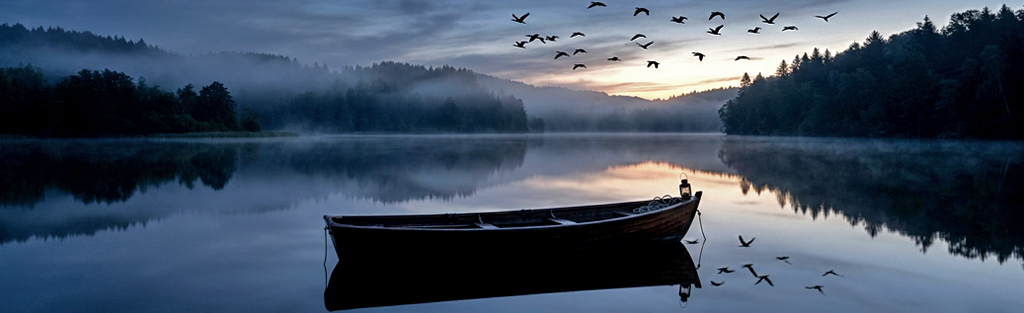
Caye Caulker’s Split—the narrow channel that divides the island—takes on a completely different character in Belize’s misty mornings. The mangrove-fringed far shore appears as a painterly wash of gray-green through morning fog, and the reflective water surface creates mirror images of moored fishing boats and the channel marker post in early morning stillness. This is the contemplative, atmospheric side of Caye Caulker that the sun-and-snorkel crowd rarely photographs.
Antelope Falls doubles in visual power after rainfall. The approach trail is itself extraordinarily photogenic—giant heliconias with rain-jeweled leaves, tree ferns framing the trail, and the sound of the falls growing louder through the forest. The falls themselves, dramatically increased in volume, create a fine mist that reaches 30–40 meters outward—perfect for soft-light portrait photography with a misty waterfall background.
Five Blues Lake in overcast Belize conditions displays its extraordinary color palette most dramatically. The lake’s five blue-aquamarine shades—caused by the interplay of light through water of varying depth over the karst limestone bottom—are most vivid in the diffuse, shadow-free light of overcast mornings. Shooting from the low dock at the water’s edge, with the surrounding forest reflected in the lake surface, produces images of surreal, painterly beauty.
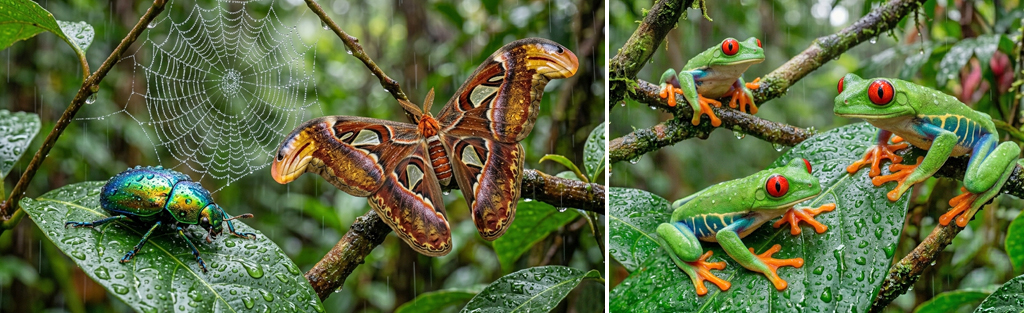
Belize’s rains activate an extraordinary micro-world of photographic subjects. Red-eyed Treefrogs (Agalychnis callidryas) are perhaps the most photographed animal in Central America, and April-May is the best time to find them in Belize, clinging to leaves in postures of extraordinary photogenic grace. Red-eyed treefrogs don’t move rapidly, tolerate close approach with a macro lens, and their combination of brilliant red eyes, green body, and orange feet makes them one of nature’s most perfectly designed photography subjects.
Rain-covered insects—iridescent beetles, geometrically perfect spiderwebs beaded with drops, the enormous Atlas moth—are equally extraordinary macro subjects. A 90–105mm macro lens, a ring flash or twin flash system, and patience are the tools of the rainy-season macro photographer in Belize.
Belize’s changing weather conditions create dramatic and visually rich photography opportunities across Belize. From misty jungles to vibrant coastlines, every location feels more dynamic. Photographers can capture unique perspectives that aren’t possible during drier months. It’s an ideal time to explore and document the country’s natural beauty in a more creative way.