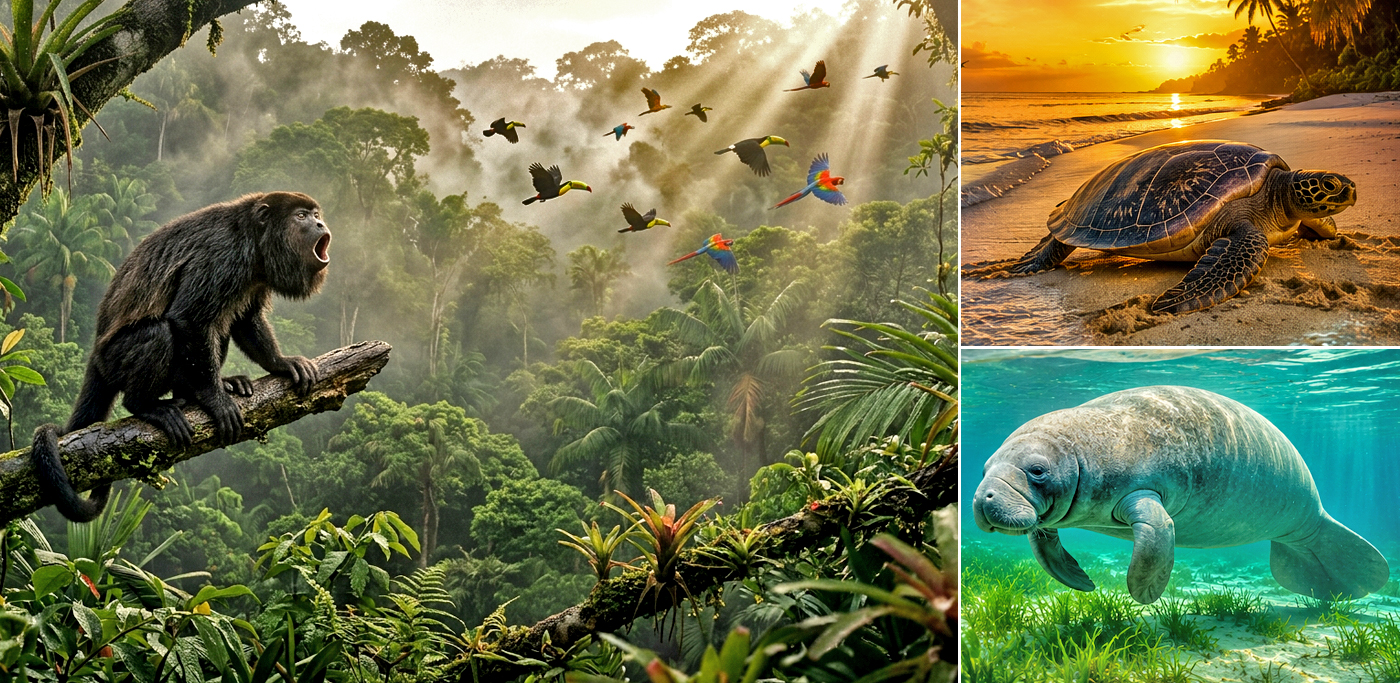
May’s position at the threshold of Belize’s wet season creates wildlife conditions of extraordinary richness. Dry-season animal concentrations near permanent water sources combine with the biological activation that the first rains trigger — producing a month of wildlife encounters that serious naturalists specifically target. From howler monkeys welcoming the dawn to sea turtles making their ancient returns to nesting beaches, May in Belize is wildlife viewing at its most dynamic.
Howler Monkeys — The Jungle's Alarm Clock
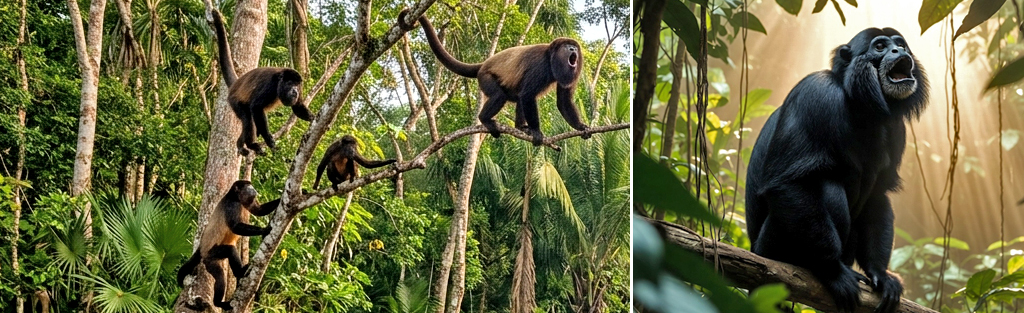
The Black Howler Monkey (Alouatta pigra) — endemic to the Yucatán Peninsula region, including Belize — is one of the loudest animals on earth, and one of the most reliably encountered mammals in Belizean forests. The Community Baboon Sanctuary near Bermudian Landing in the Belize River area was established specifically for their protection and now supports a healthy population that makes encounters virtually guaranteed.
May’s warming temperatures make howlers more vocally active in the early morning and late afternoon hours — the males’ extraordinary roaring calls (which carry 3 miles in dense forest) begin before dawn and reach their most dramatic intensity in the hour around sunrise. At Cockscomb Basin Wildlife Sanctuary and Chaa Creek Nature Reserve, howler troops are regularly encountered at close range from the trail network. The Community Baboon Sanctuary’s guided sunrise canoe tours deliver extraordinary morning encounters as troops cross the Belize River on hanging branch bridges.
Collared and White-Lipped Peccaries — The Jungle Pigs
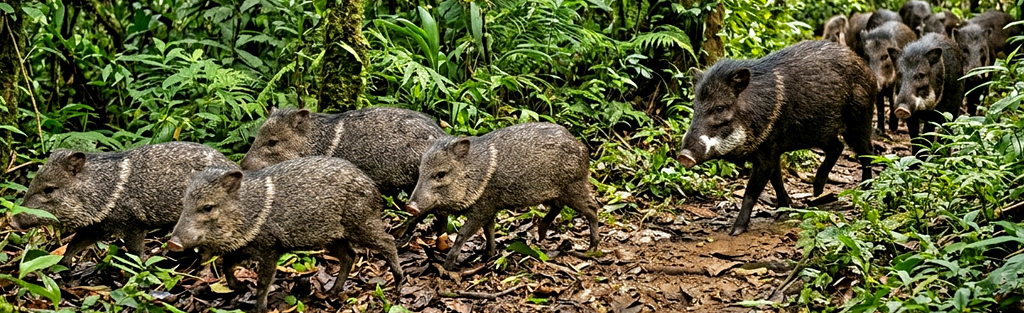
May’s trails throughout Belize’s forested reserves regularly produce encounters with the two Belizean peccary species. Collared peccaries (Pecari tajacu) — compact, grey-brown, and musky-smelling — travel in family groups of 5–30 individuals and are frequently encountered on forest trails at Cockscomb, Chaa Creek, and Chan Chich. White-lipped peccaries (Tayassu pecari) travel in much larger herds (sometimes 50–200 individuals) and provide an exhilarating wildlife encounter — the ground-trembling passage of a large peccary herd through the forest is one of the jungle’s most memorable sensory experiences.
May’s increasing humidity after the first rains makes peccaries more active at water sources — small streams and puddles in the forest become reliable encounter points in the morning and late afternoon hours.
Sea Turtles — First Nesters of the Season
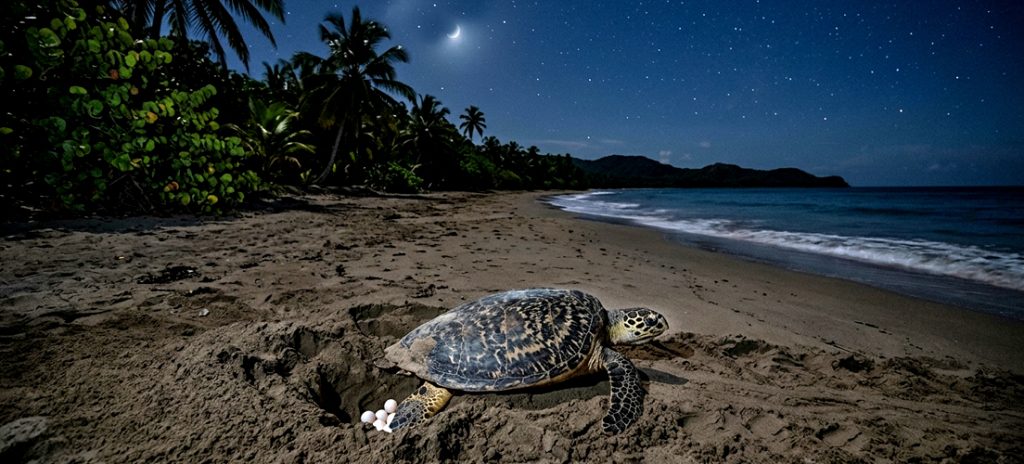
May marks the beginning of sea turtle nesting season on Belize’s beaches, with the first hawksbill and loggerhead females arriving to assess nesting beaches at night. While full-scale nesting doesn’t peak until June–August, early May sightings are possible on beaches throughout the southern coast and outer cayes. Community conservation monitors in Hopkins, Placencia, and the Turneffe Atoll work with visiting travelers to observe nesting activity responsibly — contact the Southern Environmental Association (SEA) for access to May conservation monitoring activities.
Birds in May: Migration Finale and Breeding Peak
May represents both the final weeks of spring migration (late migrants including shorebirds and some warblers continue moving through into mid-May) and the absolute peak of resident species breeding season. The combination makes species lists in May among the highest of any month in the year.
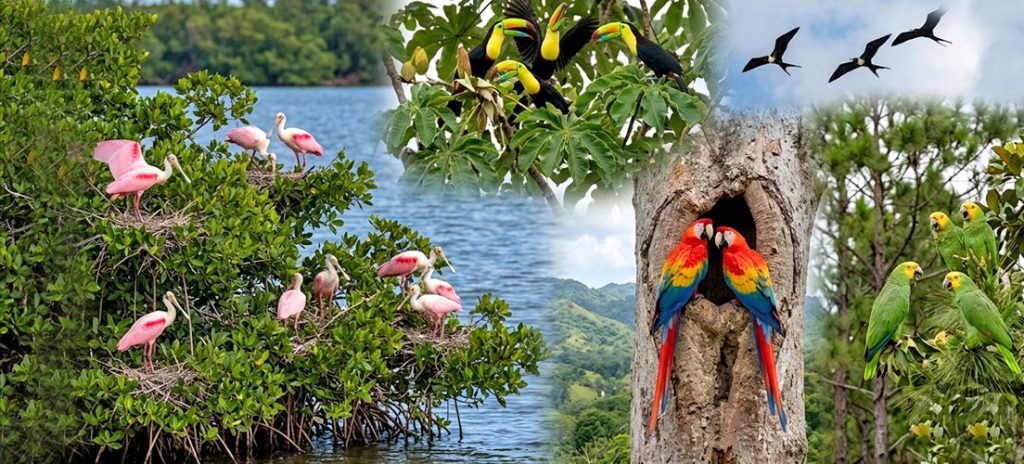
Key May bird highlights: Roseate Spoonbills are actively nesting at coastal mangrove sites; Yellow-headed Parrots (a Belize specialty) are highly vocal near Crooked Tree; Keel-billed Toucans are at maximum breeding activity with bright plumage displays; Scarlet Macaw pairs are visible at nesting sites throughout the Stann Creek District; and the first arrival of Magnificent Frigatebirds at their traditional nesting sites signals the transition toward wet-season breeding patterns.
Manatees — May Feeding Activity
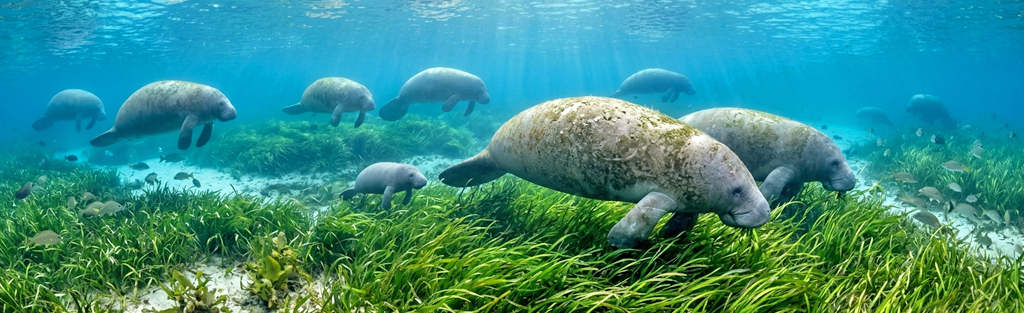
West Indian Manatees are among the most reliably encountered large mammals in Belize in May, concentrated in coastal lagoons and seagrass beds where May water temperatures optimize their metabolic function. Swallow Caye Wildlife Sanctuary (12 miles north of Belize City), the Placencia Lagoon, and the seagrass beds between Caye Caulker and the mainland all provide reliable May manatee encounters through licensed tour operators.
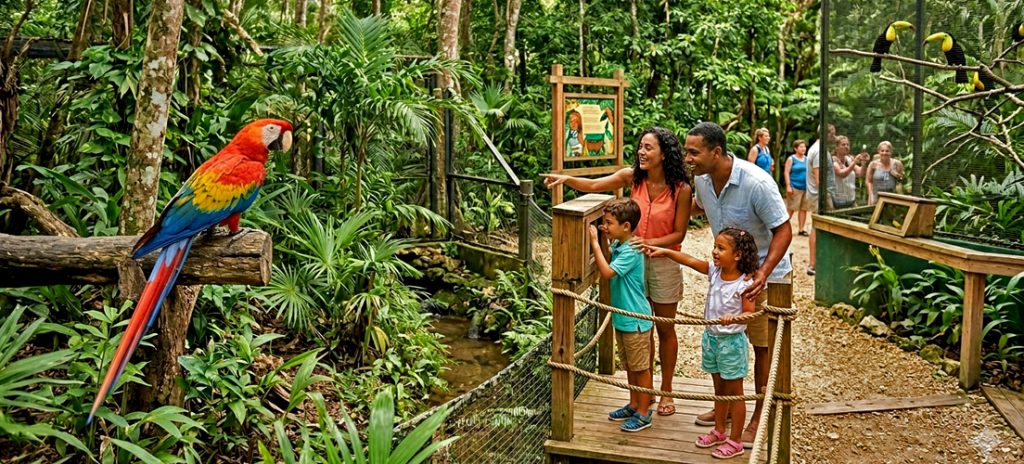
For families or travelers with limited time for extended wilderness excursions, the Belize Zoo on the Western Highway near Belmopan provides guaranteed encounters with Belizean wildlife species in a facility that genuinely serves conservation rather than commercial entertainment. Only native Belizean species are kept; most were rescued animals incapable of surviving in the wild. The Zoo’s education programs are exceptional, and May visits benefit from the full range of species being actively displayed in their outdoor enclosures.
Final Thoughts
May offers exceptional wildlife viewing opportunities as animals remain active during the seasonal transition. From jungle mammals to coastal species, the diversity is impressive. It’s a rewarding time for nature-focused travelers.