Quick Links: About Us - Contact Us
For bookings, call us at +501 677-2900
Quick Links: About Us - Contact Us

Quick Links: About Us - Contact Us


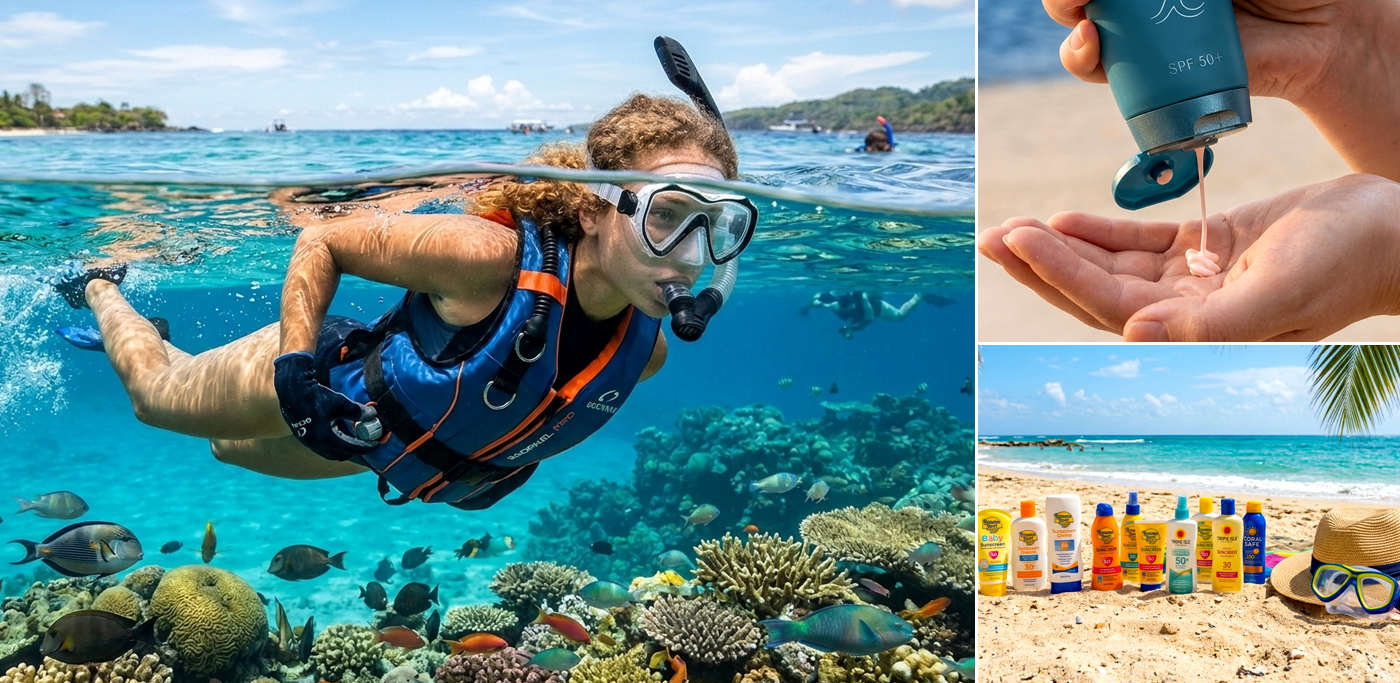
Belize is known for its marine environment, including the Belize Barrier Reef, coral formations, seagrass habitats and protected marine areas. Travelers visiting these waters for snorkeling, diving or boat excursions often wonder which sunscreen they should use and whether certain ingredients are prohibited.
The term reef-safe sunscreen appears on many product labels, but it is not a guarantee that a product is environmentally harmless. Travelers should understand the difference between official marine reserve rules, scientific evidence about sunscreen ingredients and marketing language.
Choosing appropriate sun protection is important for your health, but reducing the amount of sunscreen entering marine environments also matters.
For snorkeling and other water activities in Belize, consider a sunscreen with zinc oxide or titanium dioxide as its active UV-filter ingredients, preferably in a non-nano formulation, and use protective clothing whenever possible. However, do not assume that every product labelled reef-safe is environmentally harmless.
Belize’s marine reserve rules prohibit activities such as discharging toxic material and depositing waste, but the official Hol Chan rules reviewed for this article do not establish a blanket ban on every chemical sunscreen ingredient. Always follow the instructions of the reserve manager and your tour operator.
Sunscreen protects the skin from ultraviolet radiation, which can cause sunburn and increase the risk of skin cancer. However, sunscreen does not always remain on your skin. When people swim, snorkel or shower, some ingredients can enter the surrounding water. Researchers have studied how certain UV filters may affect marine organisms, including coral.
The US National Oceanic and Atmospheric Administration (NOAA) discusses research on sunscreen chemicals and their potential effects on coral and other marine life. It also recommends considering sun-protective clothing as part of a broader approach.
Belize’s reef environments are important to protect because they support interconnected marine habitats. The Belize Fisheries Department describes Hol Chan Marine Reserve as an area encompassing coral reef, seagrass and mangrove habitats.
This is where travelers need to distinguish between conservation guidance and legally enforceable restrictions.
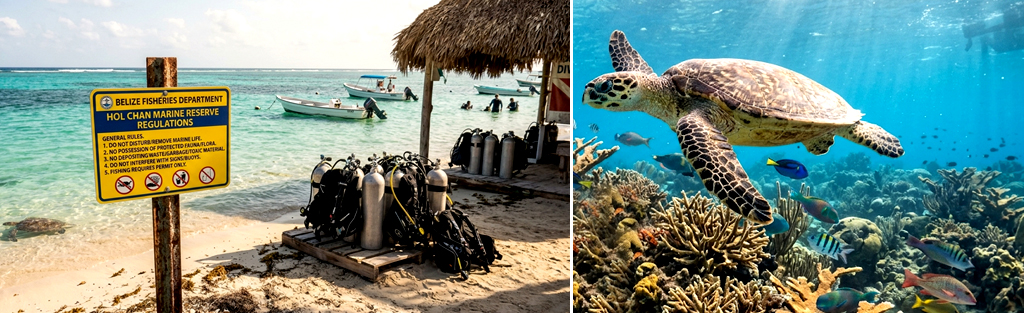
The Belize Fisheries Department publishes regulations for Hol Chan Marine Reserve. Its general rules prohibit disturbing or removing marine life without authorization, possessing protected flora or fauna without authorization, depositing waste, garbage or toxic material within the reserve, interfering with reserve signs, buoys or other management structures, and fishing without the required authorization.
The published rules reviewed do not list a blanket prohibition on all sunscreen products or provide a complete ingredient-based sunscreen restriction.
The Belize Barrier Reef World Heritage Site’s visitor guidance encourages visitors to use reef-friendly sunscreen, respect wildlife, avoid collecting marine life and prevent waste from entering the water.
Do not interpret a general recommendation as proof that every sunscreen is legally prohibited. If you are visiting Hol Chan, Shark Ray Alley or another protected area, ask the reserve manager or licensed tour operator whether any additional site-specific requirements apply.
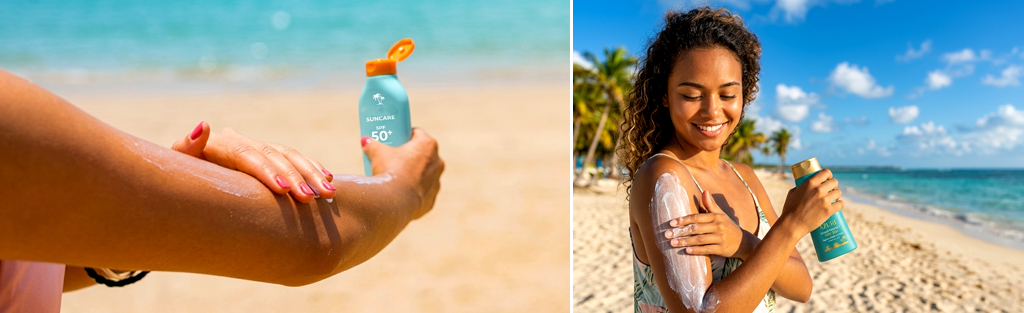
Zinc oxide is a mineral UV filter used in many mineral sunscreens. It helps protect the skin against ultraviolet radiation and is commonly found in products marketed for sensitive skin or environmentally conscious outdoor use. When comparing products, check the active ingredient list rather than relying only on the front label.
Titanium dioxide is another mineral UV filter used in sunscreen formulations. It provides UV protection and is frequently combined with zinc oxide. Formulation details matter. Some products use nanoparticles or additional coatings and ingredients, so a mineral label alone does not answer every environmental question.
These are chemical UV filters that have received attention in marine environmental research. Studies have investigated their potential effects on coral and other aquatic organisms. However, the relationship between laboratory results and environmental effects under real-world conditions is complex.
The National Academies of Sciences, Engineering, and Medicine explains that the scientific evidence should be considered carefully and that the marketing term reef-safe has no universally regulated scientific definition.
Some sunscreen ingredients are also discussed in environmental research. It is not accurate to assume that every chemical sunscreen has identical environmental effects. Instead, read the complete ingredient list and choose a product based on credible guidance, the intended activity and your skin’s protection needs.
A product marketed as reef-friendly should not automatically receive preference over a clearly labelled product with transparent ingredients and reliable sun-protection information.
You can reduce the amount of sunscreen you need by covering more of your skin.
A long-sleeved rash guard provides physical coverage and can reduce the amount of sunscreen needed on your upper body. Look for clothing with a stated Ultraviolet Protection Factor (UPF).
Avoid unnecessary prolonged exposure during periods of intense sunlight. Remember that sunlight can still reach exposed skin on cloudy days, and reflected light from water can increase exposure. The US National Park Service recommends combining protective clothing with careful sunscreen selection and shade.
Travelers staying in San Pedro, Belize City or other tourist destinations may find sunscreen at pharmacies, supermarkets, convenience stores, diving and snorkeling equipment shops, and selected hotel shops. However, the availability of specific mineral formulations should not be assumed.
If you have sensitive skin or require a particular product, bringing your preferred sunscreen from home is a practical option. Before departure, check the ingredients and packaging rather than relying on a local product being available. Also consider bringing enough for your trip; a smaller selection in a remote destination may not include the formulation you prefer.
Before booking a tour to Hol Chan Marine Reserve or another marine location, ask the operator:
If you are comparing San Pedro snorkeling excursions, assess the operator’s route, reserve permissions, equipment, group size and safety procedures rather than choosing solely on advertised price.
Choosing reef-conscious sun protection is a practical part of responsible travel in Belize. The best approach is to understand the ingredients, follow the rules of the marine reserve you visit and reduce unnecessary exposure of your skin to the sun. A mineral sunscreen may be a useful option, but no product should be treated as automatically harmless simply because its packaging says reef-safe.
Protective clothing, responsible snorkeling behavior and proper waste management should all be part of your travel preparation.