Quick Links: About Us - Contact Us
For bookings, call us at +501 677-2900
Quick Links: About Us - Contact Us

Quick Links: About Us - Contact Us
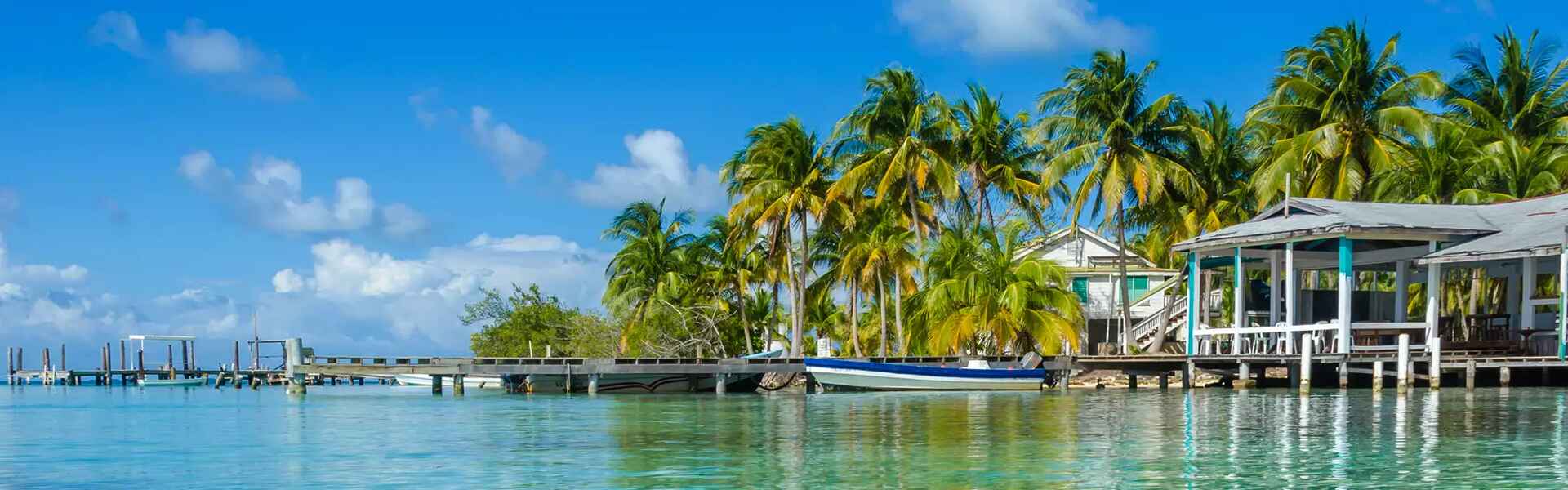

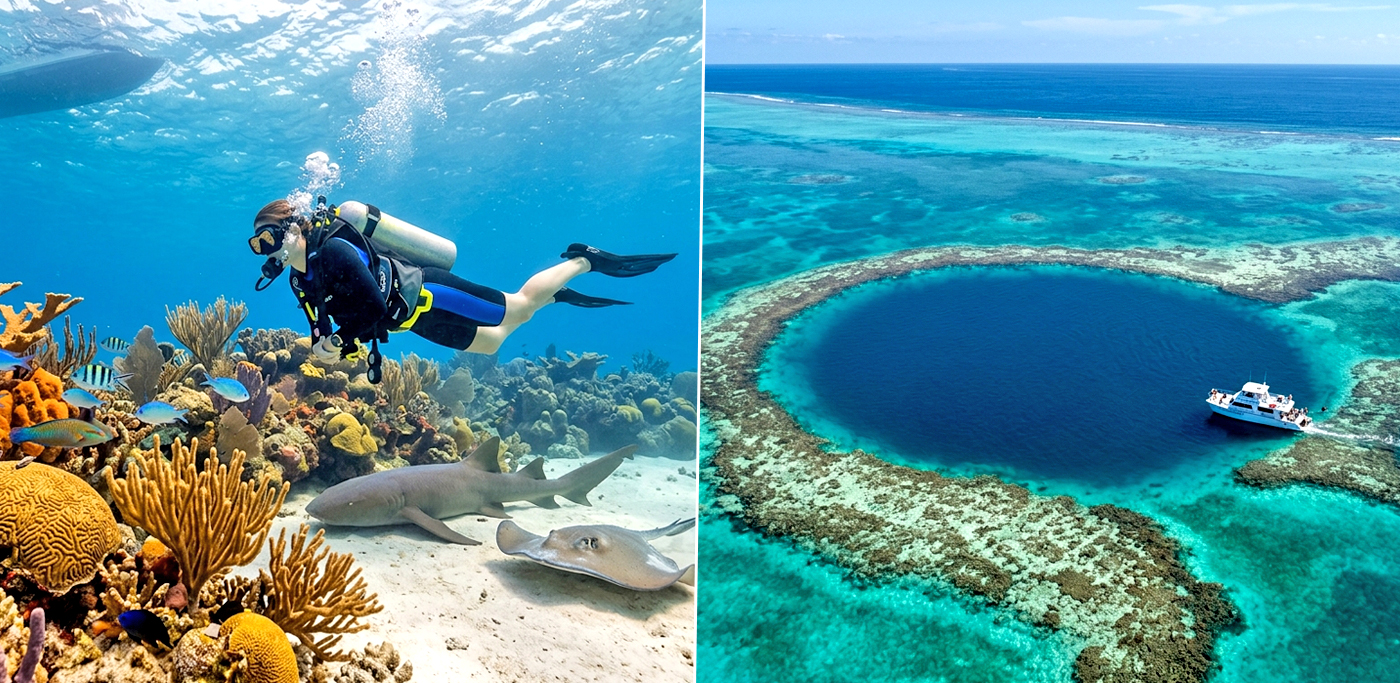
Belize has long held a spot on serious divers’ bucket lists, largely thanks to one striking natural feature: the Great Blue Hole. But the country’s diving scene goes far beyond that single iconic sinkhole. With warm summer water temperatures, generally calm seas, and some of the clearest visibility in the Caribbean, July through September offers excellent conditions for exploring Belize’s underwater landscape — from dramatic wall dives to shallow reef systems perfect for newer divers.
Water temperatures in summer typically sit between 82–86°F, meaning most divers are comfortable in just a 3mm shorty wetsuit or even a rash guard. Visibility often exceeds 100 feet at offshore atolls, and while summer does overlap with the start of hurricane season, most storm activity doesn’t ramp up until later in the year, leaving July with long stretches of calm, divable weather.
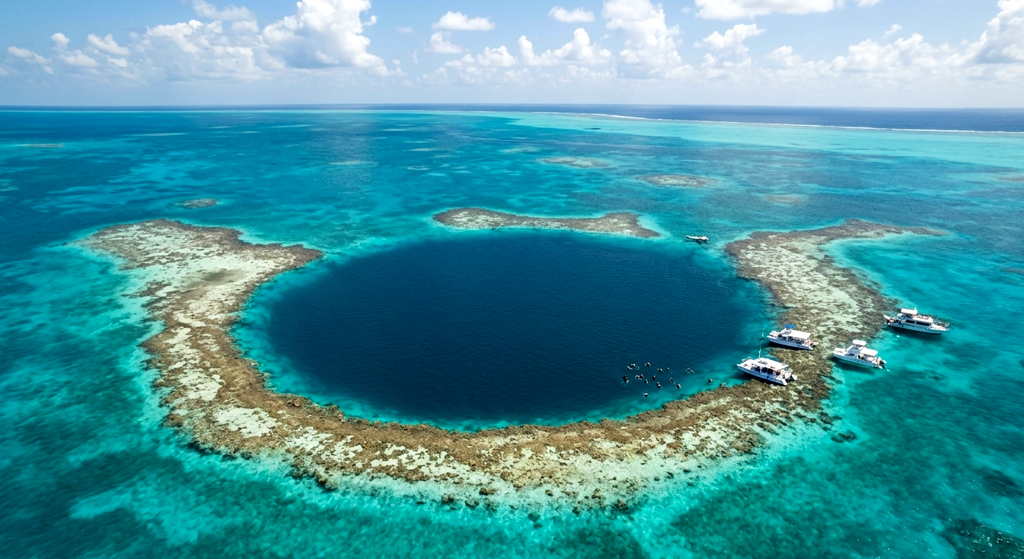
No list of Belize dive sites is complete without the Blue Hole Natural Monument, a nearly perfectly circular sinkhole roughly 1,000 feet across and over 400 feet deep. Made globally famous by Jacques Cousteau’s 1971 expedition, the site is known for its dramatic limestone stalactite formations, remnants of when the hole was a dry cave system before rising sea levels flooded it thousands of years ago.
This is an advanced dive, typically requiring an Advanced Open Water certification due to depth (dives usually reach 130 feet) and the lack of coral or marine life at that depth — the appeal here is entirely about the geological formations and the surreal feeling of descending into deep blue water. Reef sharks are commonly spotted circling near the drop-off. Most Blue Hole trips depart from Ambergris Caye or Caye Caulker as full-day excursions, often paired with stops at Half Moon Caye.
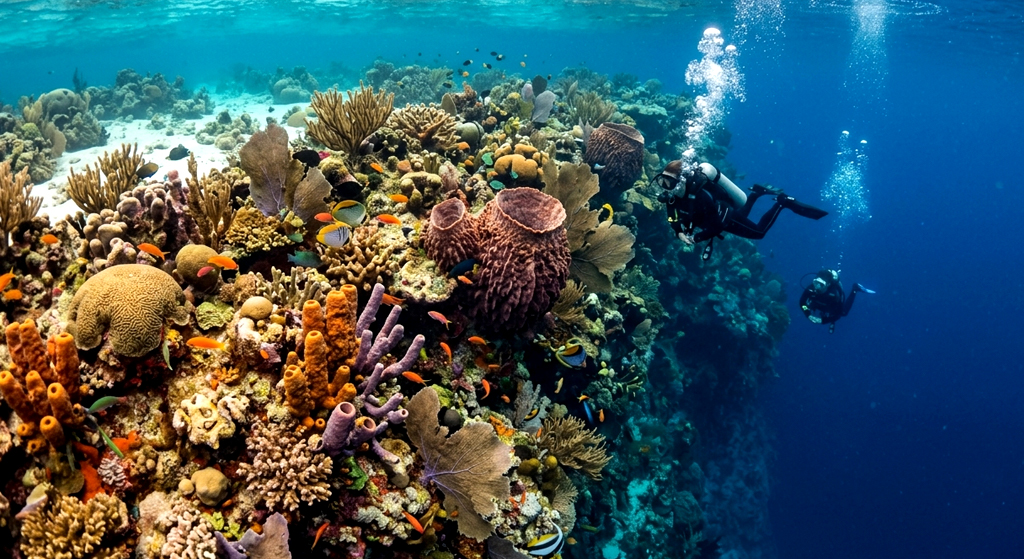
Paired with most Blue Hole trips, Half Moon Caye offers a striking contrast: a vibrant wall dive dropping from around 35 feet into deep blue water, covered in healthy coral and sponges. It’s also home to a protected red-footed booby bird colony above the surface, making the surface interval as interesting as the dive itself.
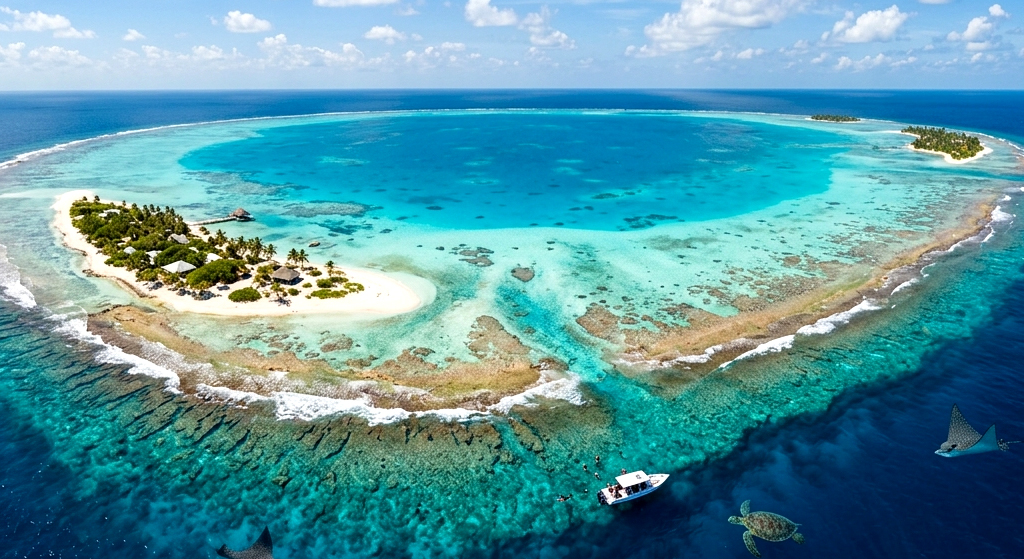
One of only four coral atolls in the Western Hemisphere, Glover’s Reef sits roughly 45 minutes offshore and offers some of Belize’s most pristine diving. Because it’s more remote, it sees far less traffic than reef sites closer to the mainland, and the drop-offs here are dramatic — walls plunge from shallow reef flats into deep ocean in a matter of feet. Expect eagle rays, turtles, and large pelagic fish in the open water beyond the reef edge.
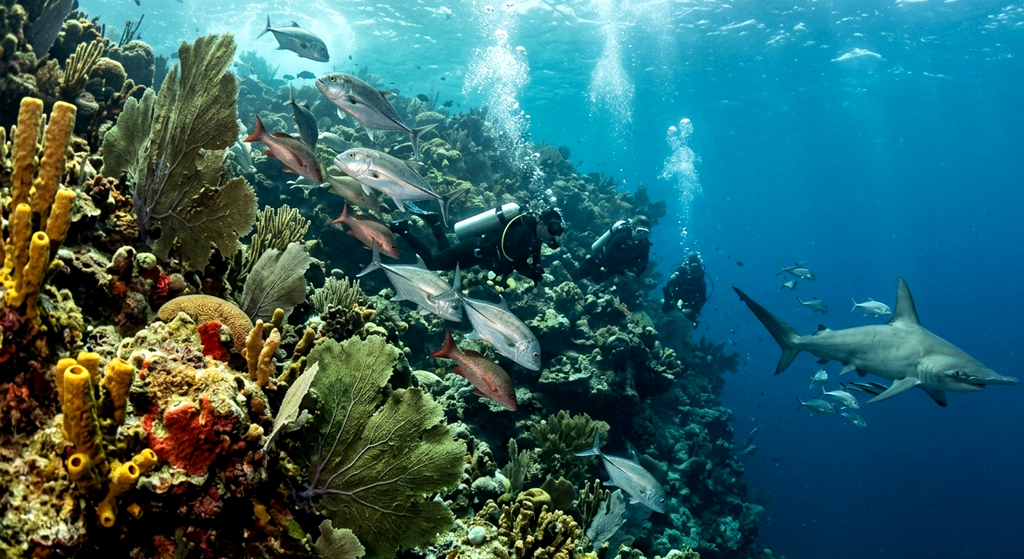
Turneffe is Belize’s largest atoll and a favorite among experienced divers for its variety — from gentle patch reefs suitable for less experienced divers to dramatic walls and swim-throughs on its outer edges. The Elbow, at Turneffe’s southern tip, is known for strong currents and larger pelagic species, including the occasional hammerhead sighting, making it a favorite for advanced divers looking for something beyond typical reef diving.
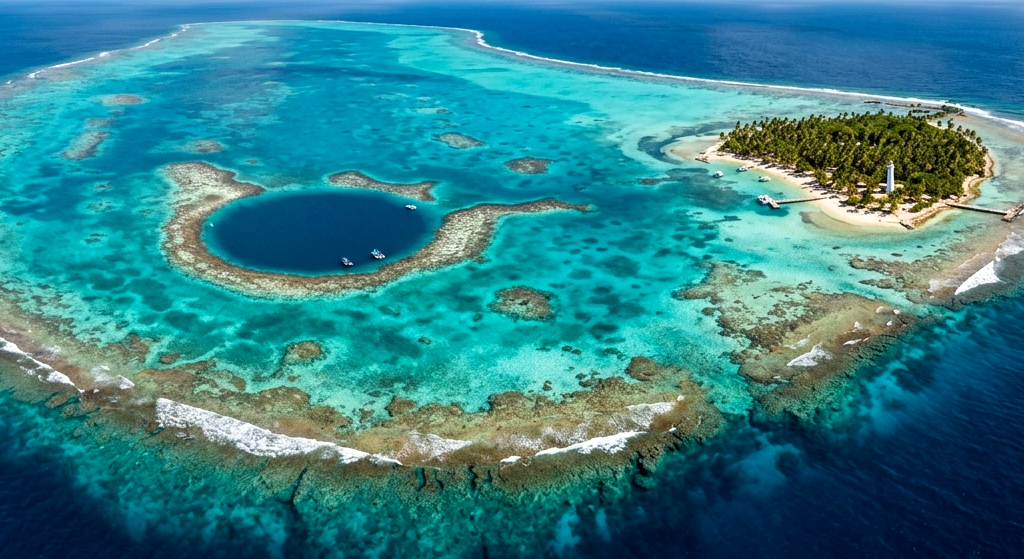
Home to both the Blue Hole and Half Moon Caye, Lighthouse Reef is the outermost of Belize’s atolls and offers exceptional visibility thanks to its distance from mainland runoff. Beyond the two headline sites, its outer walls offer excellent drift diving with large schools of fish and healthy coral cover.
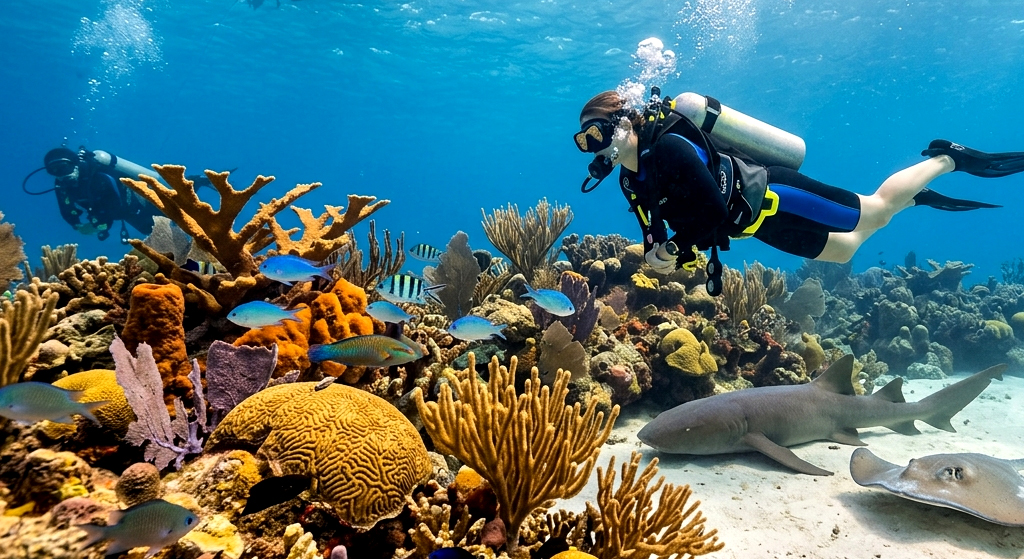
Not every diver arriving in Belize is chasing 130-foot depths. For newer divers or those without Advanced Open Water certification, sites around Hol Chan Marine Reserve and the shallow patch reefs near Caye Caulker offer excellent visibility and abundant marine life — nurse sharks, stingrays, and colorful reef fish — typically in the 20–40 foot range, making them ideal for building confidence.
Many dive shops in Belize offer PADI or SSI certification courses on-site, so if you’re traveling without certification but want to dive the Blue Hole or other advanced sites, plan for a few extra days to complete an Open Water course beforehand. Reputable operators, mostly based out of San Pedro (Ambergris Caye), Caye Caulker, and Placencia, typically include gear rental, park fees, and light refreshments in day trip pricing.
Look for shops affiliated with recognized certification bodies and ask about group sizes — smaller boats (six to ten divers) tend to offer more personalized dive briefings and closer supervision, particularly valuable for less experienced divers tackling deeper sites.
Do I need Advanced Open Water certification to dive the Blue Hole? Most operators require it due to the site’s depth (dives typically reach 130 feet), though many dive shops in Belize offer the certification course on-site if you have a few extra days.
What’s the best dive site for beginners in Belize? The shallow patch reefs around Hol Chan Marine Reserve and Caye Caulker offer excellent visibility and marine life at depths typically under 40 feet, ideal for newer divers.
Is summer a good time to dive in Belize? Yes. Water temperatures are warm, visibility is often excellent, and while summer overlaps with the start of hurricane season, July generally offers calm, divable conditions.
Summer in Belize offers a genuinely varied diving experience, from the geological drama of the Blue Hole to the vibrant coral walls of Glover’s and Turneffe atolls, all the way down to gentle, beginner-friendly reef dives near Caye Caulker. With warm water, strong visibility, and a range of sites suited to every certification level, Belize remains one of the most accessible world-class diving destinations in the Caribbean — and summer is one of the best times to experience it.