Quick Links: About Us - Contact Us
For bookings, call us at
+501 677-2900
Quick Links: About Us - Contact Us

Quick Links: About Us - Contact Us

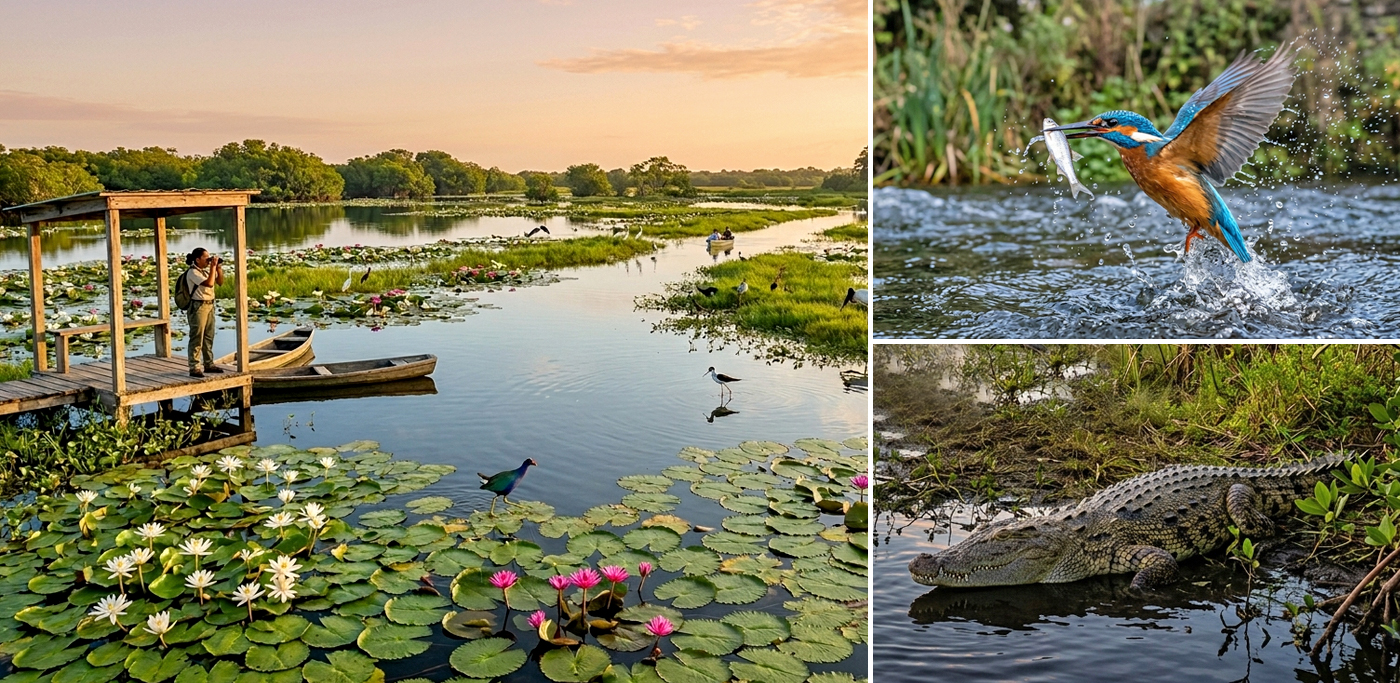
There is a Belize that most tourists never see—a vast, silent, water-world of lagoons, mangroves, and freshwater wetlands where Victoria amazonica water lilies float like dinner-plate-sized sculptures and Roseate Spoonbills paint the sky pink against a blue afternoon. In April, as the first rains begin to arrive and water levels slowly rise, Belize’s wetland parks undergo a quiet transformation that makes them some of the most photographically and spiritually rewarding destinations in the entire country.
The transition from dry season to early wet season is the precise moment when Belize’s wetlands are most dynamic. Dry-season water levels have concentrated wildlife—birds, crocodiles, fish, and invertebrates—into smaller areas of remaining water, making encounters remarkably dense and easy. As April rains begin to arrive, the freshwater blooms of water lilies and aquatic vegetation respond almost immediately, producing spectacular displays of floating blossoms that peak in the first weeks of the rainy season’s onset.
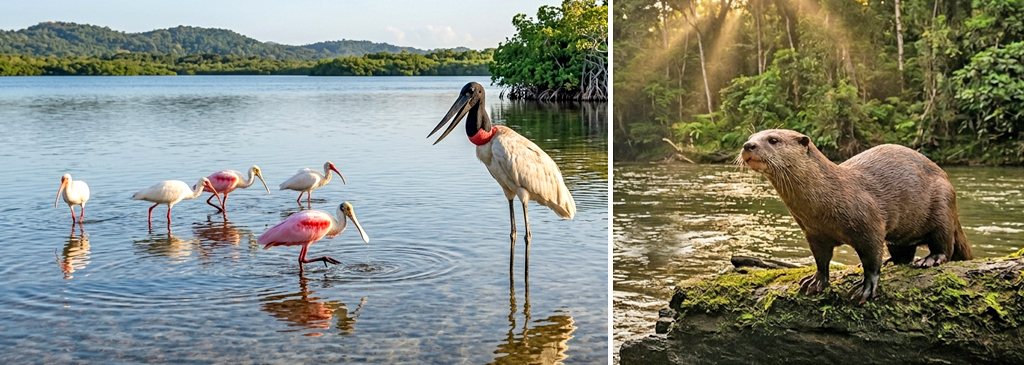
For birdwatchers, April wetlands offer extraordinary density. Waterbirds that have spent the dry season on the most permanent water sources begin dispersing as fresh water spreads across the landscape, and the weeks of transition are peak viewing time for species including Bare-throated Tiger Heron, Limpkin, Northern Jacana, and the spectacular Sungrebe.
Crooked Tree is a village island set within Belize’s first RAMSAR-designated wetland of international importance—a vast shallow lagoon system in the Belize River watershed that supports extraordinary concentrations of waterbirds year-round. The sanctuary’s 16,400 acres of lagoon, marsh, and savanna woodland are most dramatically beautiful in April, when rising water levels flood the surrounding areas and concentrate wildlife in spectacular fashion.
The village of Crooked Tree itself is one of Belize’s most atmospheric communities—a cashew-growing village accessible only by boat or a single causeway road, where life moves at a pace unchanged for generations. The annual Cashew Festival (typically held in May) is foreshadowed by April’s cashew harvest season, when the air carries a faint sweet-tart fragrance and fresh cashew wine is available from local producers.
Boat tours of the Crooked Tree lagoon system are best arranged through the Belize Audubon Society’s on-site ranger station or through registered local guides in the village. Tours typically run 2–3 hours and cost approximately USD 30–50 per person. Early morning departures (6:30–7:00 AM) produce the best wildlife activity and the most dramatic light for photography.
The Lamanai Archaeological Reserve on the banks of the New River Lagoon in Orange Walk District is Belize’s most architecturally spectacular Mayan site—but the boat journey to reach it is arguably as memorable as the ruins themselves. The 26-mile trip up the New River from Orange Walk Town passes through extraordinary wetland habitat: narrow river channels canopied by cohune palms and strangler figs, open lagoon sections where American crocodiles bask on mud banks, and floating gardens of aquatic vegetation where Pygmy Kingfishers hunt from overhanging branches.
April is exceptional for the Lamanai river journey. Water levels begin to rise, pushing wildlife to more visible positions along the river margins. The lotus and water lily blooms that carpet sections of the lagoon are at their most spectacular. Howler monkeys—always present in the tall trees above the river—seem more vocal in the morning hours as temperatures are more moderate.
Full-day Lamanai tours from Orange Walk or Belize City run USD 85–120 per person, including river transport, entrance fees, a licensed guide, and lunch. These are genuinely essential Belize experiences, combining natural history, archaeology, and wildlife in a single extraordinary day.
The Shipstern Nature Reserve in Corozal District protects a stunning mosaic of freshwater lagoons, coastal mangroves, and dry subtropical forest. Guided tours of the lagoon system reveal spectacular concentrations of wading birds and offer reliable crocodile sightings. The reserve’s butterfly breeding center is one of Belize’s most educational ecotourism facilities.
The Spanish Creek Wildlife Sanctuary in the Cayo District is a less-visited gem—a freshwater creek system fringed by gallery forest where Sunbitterns dance their extraordinary display, and Neotropical Otters occasionally appear along the banks. Small-group boat tours are arranged through the community-based ranger program.
Long-sleeved, light-colored clothing is recommended for boat tours—particularly in April when mosquito activity begins to increase with rising water levels. Polarized sunglasses dramatically improve water surface visibility for crocodile and fish spotting from boats. A waterproof bag for camera equipment is essential, as river spray and brief showers can arrive without warning. Book boat tours in advance as demand significantly exceeds capacity at popular sites.
April is an ideal time to explore Belize’s wetlands, where blooming water lilies and active wildlife create peaceful yet dynamic scenes. These lesser-known spots offer a break from busy tourist areas and provide unique opportunities for photography and quiet exploration in nature.