The wet season in Belize produces some of the most visually stunning photographic conditions anywhere in the Americas. Overcast skies soften harsh light. Rain-washed leaves glow. Animals are active. And the lush green backdrop makes any subject look extraordinary.
But it also soaks your gear, fogs your lens, and empties your batteries faster than you expect. Here’s how to shoot well in Belize’s June conditions.
Understanding the Light in Wet Season
Rainy season isn’t about avoiding light — it’s about using different light. Overcast conditions create a natural diffuser: soft, even illumination with no harsh shadows. This is actually ideal for:
Forest interiors — the dappled light problem disappears under cloud cover
Bird portraiture — plumage detail shows more evenly without blown-out highlights
The windows of best light are:
Dawn (5:30–7:30 AM): Often clear before cloud builds; golden light for canopy shots
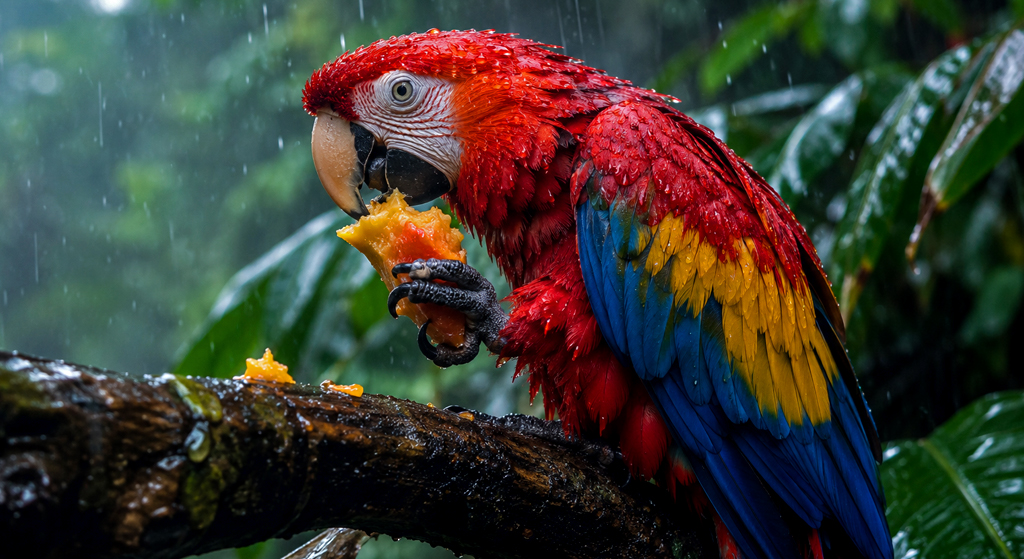
After rain showers: Water droplets on leaves and feathers; clean backgrounds; animals resume activity immediately after rain passes
Overcast midday: Normally terrible for photography, but excellent in wet season
Camera Settings for Wet-Season Belize
For Moving Wildlife (Birds, Mammals)
Shutter speed: 1/800s minimum for birds in flight; 1/400s for perched birds
ISO: Push to ISO 800–3200 under overcast skies — modern sensors handle this well
Aperture: f/4–f/5.6 for subject isolation; close down to f/8 for group shots
Mode: Aperture priority (Av/A) with auto-ISO for fast-changing forest light
For Macro & Stationary Subjects
Shutter speed: 1/250s minimum (hand-held); go slower on a tripod
Aperture: f/8–f/11 for depth of field on insects and frogs
ISO: Keep low (100–400) for sharpest detail
Focus: Manual or single-point autofocus; use a focus rail for precise macro work
Rain Protection for Your Gear
This is non-negotiable in Belize’s June conditions.
Rain sleeve or camera rain cover: Aquatech, Think Tank, and Op/Tech all make affordable options; a dry bag with a hole cut for the lens barrel also works
Silica gel packets: Put 3–5 in your camera bag each day; they absorb condensation and prevent fungal growth on lenses (a serious risk in humid Belize)
Lens cloth in every pocket: microfiber cloths are the single most used accessory in wet-season shooting
Waterproof backpack or Pelican case for transport between locations
Battery management: Humidity and cooling from rain drain batteries faster; carry minimum 2–3 spares
Best Wildlife Subjects for June Photography
Birds
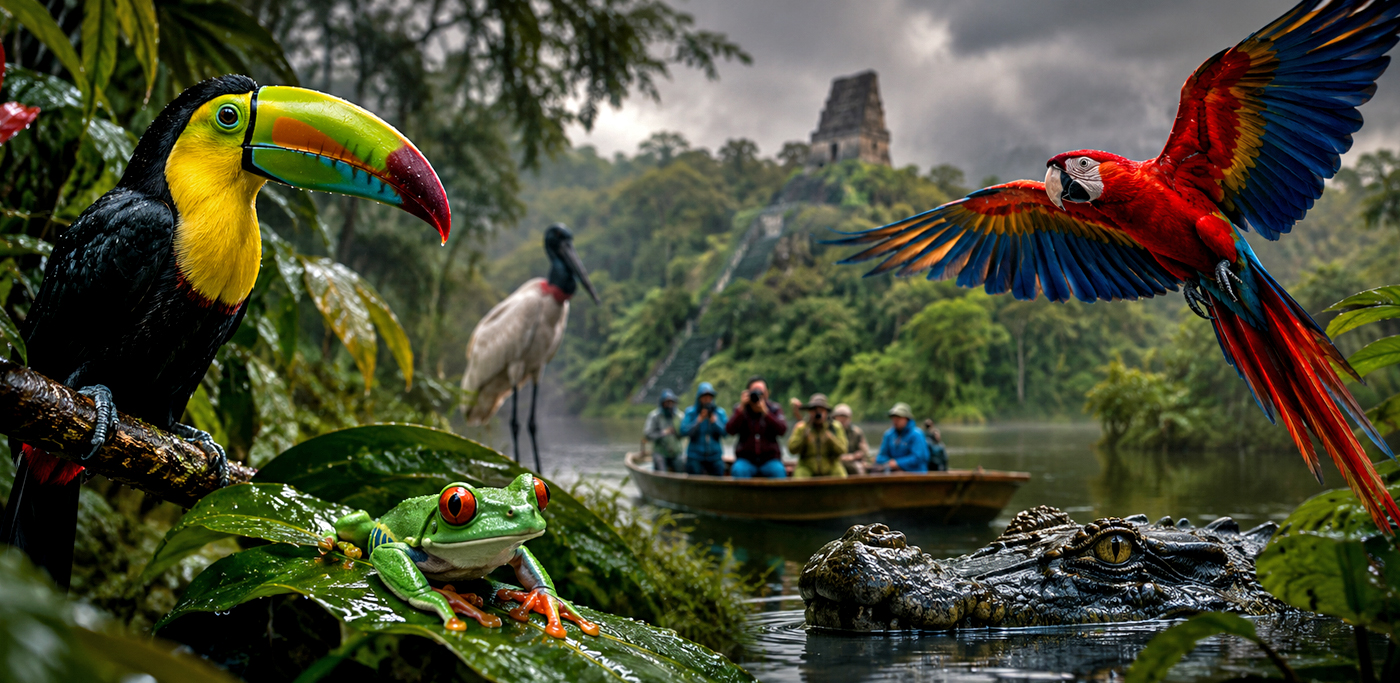
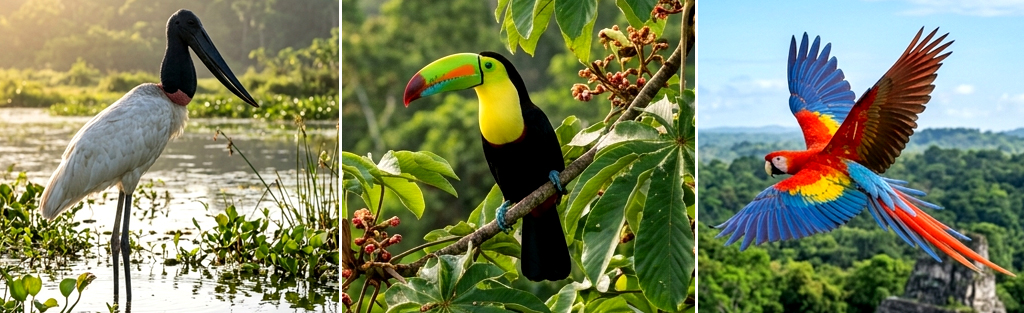
Keel-billed toucan perched on a flowering cecropia — a classic Belize image
Jabiru stork at Crooked Tree — towering, prehistoric, and surprisingly cooperative with patient photographers
Scarlet macaw in flight at Caracol — requires early start and a telephoto lens (400mm+)
Reptiles & Amphibians
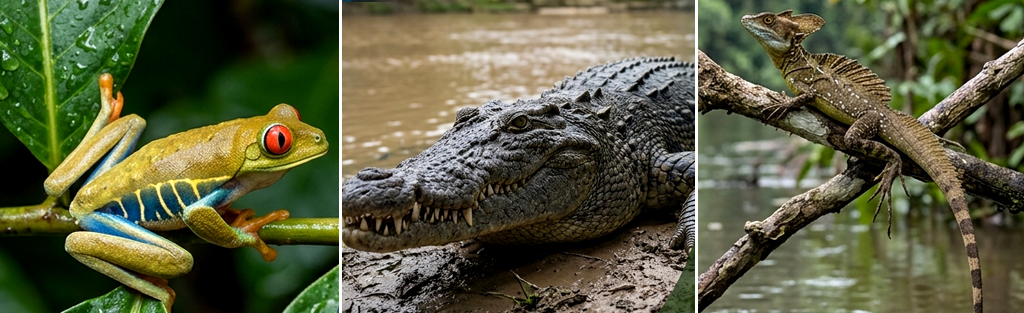
Red-eyed tree frogs — most active after rain, easy to find on vegetation at night near the forest edge
American crocodile at Lamanai — the boat approach makes frame-filling shots achievable
Jesus lizard (basilisk) — lightning fast but frequently stops for seconds on branches over water
Mammals
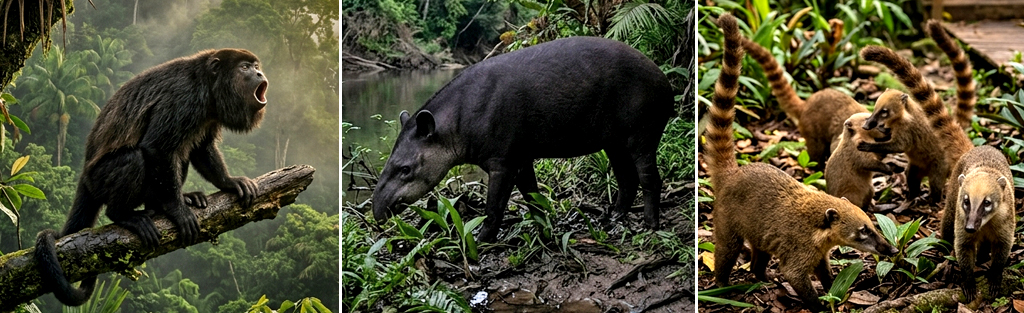
Howler monkeys — backlit against an overcast sky; wide-angle includes the canopy context
Tapir near water — dawn or dusk, near river access points in Cockscomb; patience required
Coatimundi — surprisingly approachable at several lodges; excellent for behavioral shots
Post-Processing for Rainy-Season Images
Wet-season shots often need:
Slight lift in shadows (forest understory is deep)
White balance correction toward neutral from overcast blue cast
Final Thoughts
Belize in the wet season is a photographer’s playground once you stop fighting the conditions and start working with them. Pack smart, protect your gear, arrive early, and stay out after the rain passes. The shots waiting for you in June’s Belize — a macaw backlit against storm clouds, a frog mid-call in the rain — aren’t the ones you find on travel brochures. They’re better.