Quick Links: About Us - Contact Us
For bookings, call us at
+501 677-2900
Quick Links: About Us - Contact Us

Quick Links: About Us - Contact Us

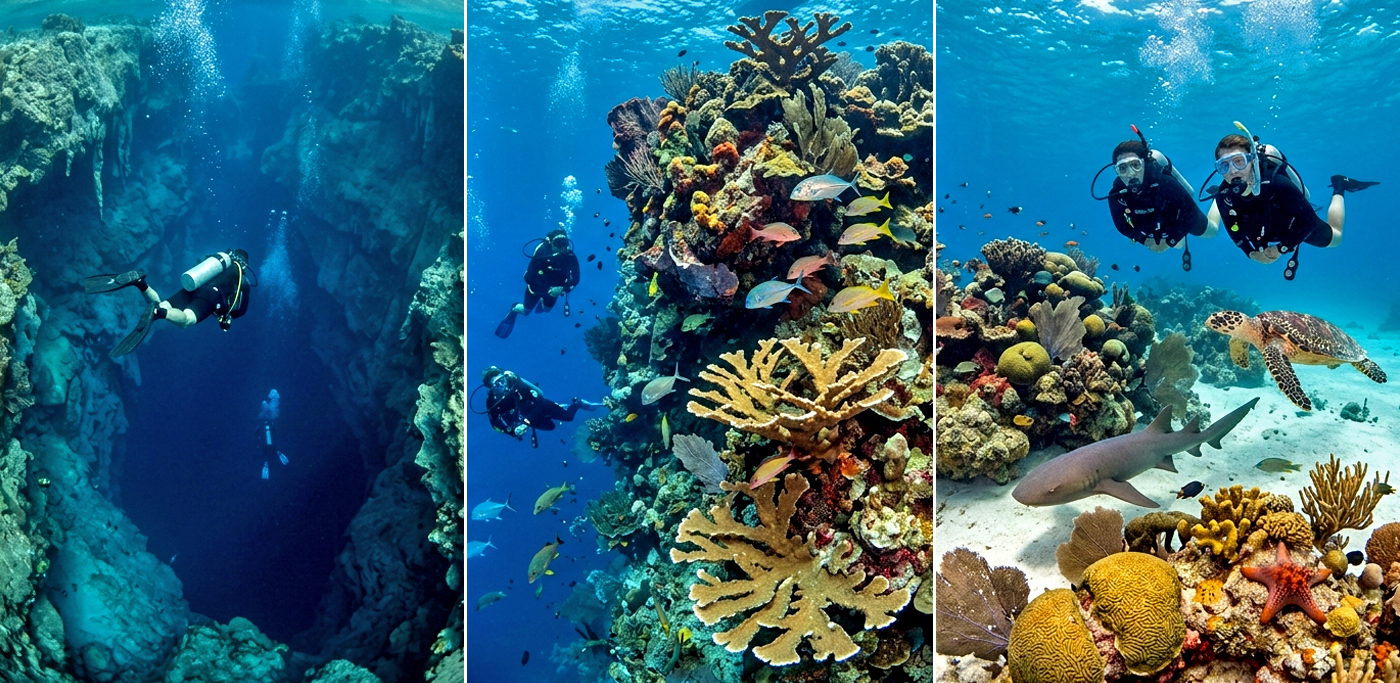
Belize’s best-known dive sites are the Great Blue Hole on Lighthouse Reef, the wall dives and elkhorn coral of Turneffe Atoll, and the shallower reef dives close to Ambergris Caye and Caye Caulker. In the fall, expect warm water, occasional rough seas from tropical weather, and it’s a good time to get certified since dive shops are quieter.
The Belize Barrier Reef is one of the longest barrier reef systems in the world and is protected within the Belize Barrier Reef Reserve System, a UNESCO World Heritage Site. Offshore, three coral atolls, Turneffe, Lighthouse Reef and Glover’s Reef, offer wall dives in exceptionally clear water.
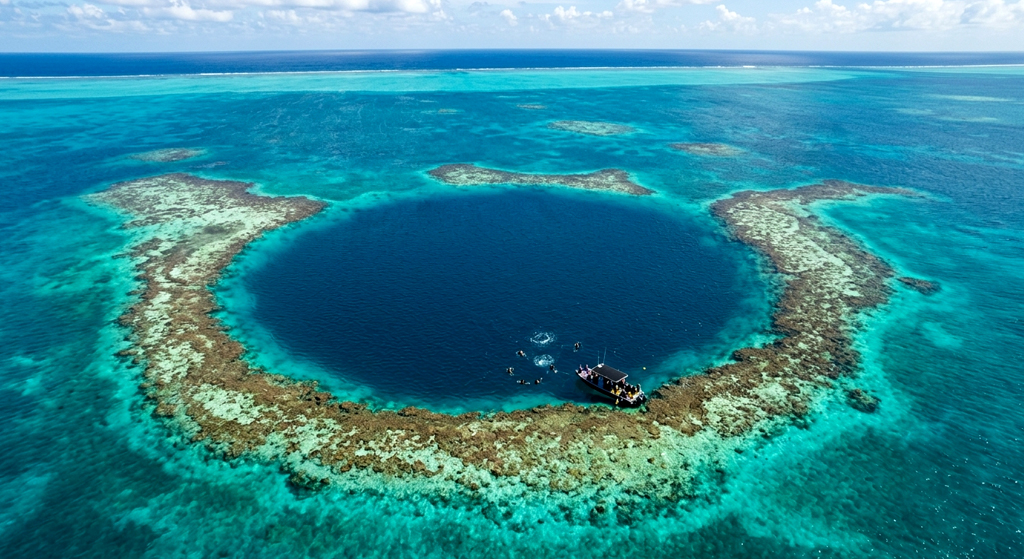
Belize’s most famous dive site is a nearly perfect circular sinkhole about 300 meters across and over 100 meters deep, ringed by the reef of Lighthouse Reef Atoll. Divers descend past dramatic limestone stalactite formations. It is a deep dive suited to certified divers, typically reached by a long boat trip or a liveaboard.
Fall note: It is a full-day, weather-dependent trip. Confirm the operator’s cancellation policy before you book.
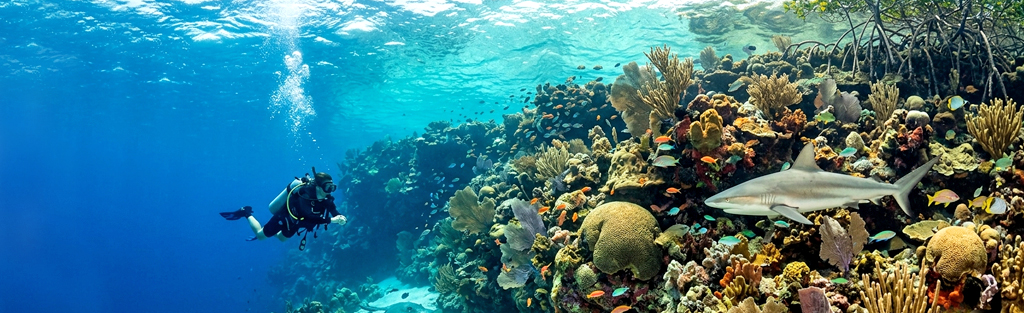
The largest of Belize’s atolls, Turneffe combines wall dives, coral gardens and mangrove-lined lagoons, with a good chance of encountering rays and reef sharks.
Fall note: Many operators run this as a day trip from Belize City or as a stay at a Turneffe lodge.
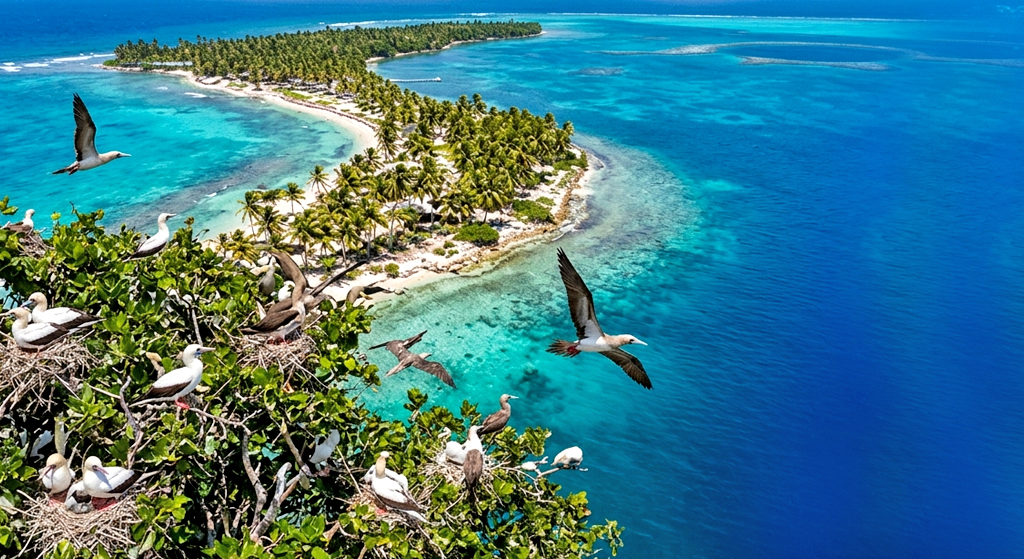
Near the Blue Hole, Half Moon Caye Wall drops steeply and is known for dramatic coral formations and pelagic sightings. The caye itself is a national monument and seabird sanctuary.
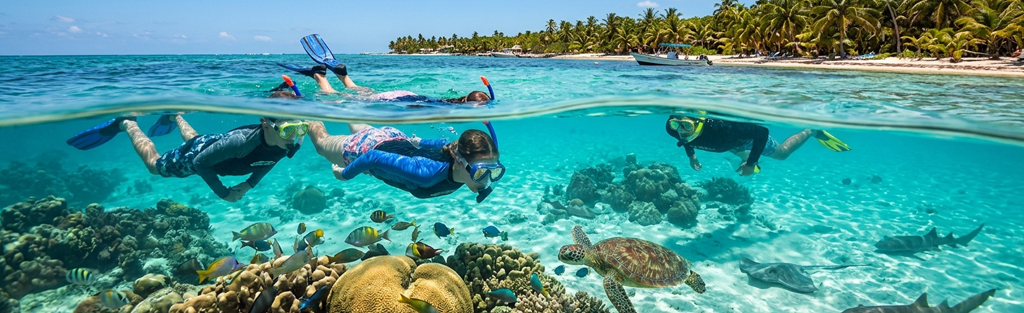
Closer to shore, San Pedro-based dive shops run trips to reef walls and cuts near Hol Chan Marine Reserve, suitable for a wider range of experience levels, including newly certified divers.
Fall note: These shorter trips are more reliably run than long atoll days when the sea is choppy.
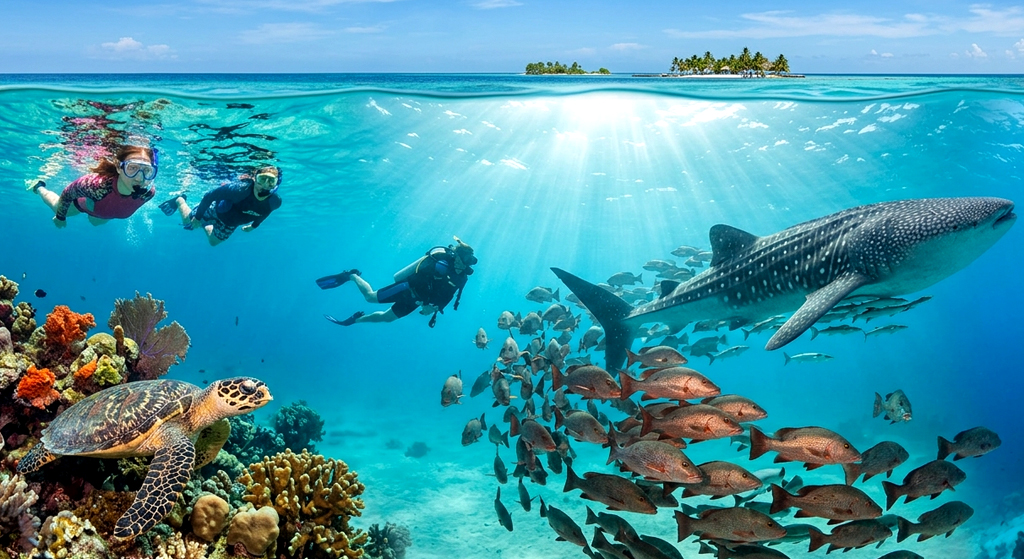
Off Placencia, this reserve is known for gatherings of whale sharks tied to the spawning of certain reef fish, typically around the full moons of spring. It’s not a fall whale-shark site, but the reserve offers strong diving and snorkeling year-round.
Visibility is generally described as best from spring through early summer, with wet-season months, including October, offering somewhat reduced but still workable visibility and warm water. Rougher seas and rain can cancel long offshore trips at short notice, more so than short reef dives close to San Pedro or Caye Caulker.
Belize is a popular place to learn to dive, with PADI-affiliated shops on Ambergris Caye, Caye Caulker and along the coast. A typical Open Water course runs about three to four days and combines classroom or e-learning with pool and open-water dives.
Fall advantages for certification: Shops are quieter, so you may get more one-on-one instructor time and easier scheduling. Choose a shop registered with the Belize Tourism Board, and confirm your dives will happen on protected, calmer sites if the outer reef is rough that week.
|
Option |
Best for |
Fall consideration |
|
San Pedro or Caye Caulker day trips |
New divers, shorter days |
Most reliable in changeable weather |
|
Turneffe or Lighthouse Reef day trip |
Certified divers wanting atoll sites |
Long boat ride, weather-dependent |
|
Liveaboard |
Serious divers wanting multiple atolls |
Higher cost, book refundable rates |
Dive shops in San Pedro and Caye Caulker typically post their own trip schedules a few days out rather than months in advance, which suits October travel since firm plans made far ahead can collide with a weather change. Expect a two-tank reef trip to run a few hours, with a Blue Hole day taking most of a full day once travel time is included. Costs vary by operator and package (gear rental, certification level required, and whether lunch or park fees are bundled), so ask for a full breakdown before booking, and confirm the shop’s policy on rescheduling if a trip is cancelled for weather.
Belize’s reef system depends on divers following the same no-touch, no-feed etiquette expected of snorkelers, and buoyancy control matters even more underwater, since fins can damage coral that a swimmer’s feet might just brush past. Choosing an operator that briefs this clearly, and enforces it, is part of choosing a good dive shop, not just a matter of manners.