Quick Links: About Us - Contact Us
For bookings, call us at
+501 677-2900
Quick Links: About Us - Contact Us

Quick Links: About Us - Contact Us
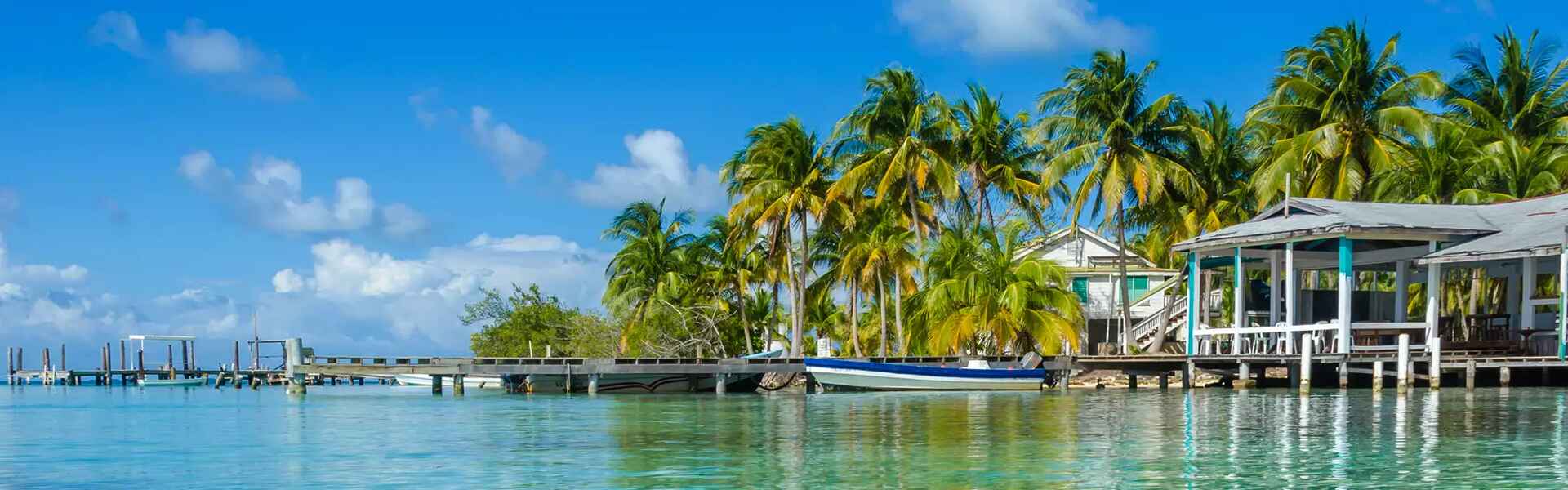

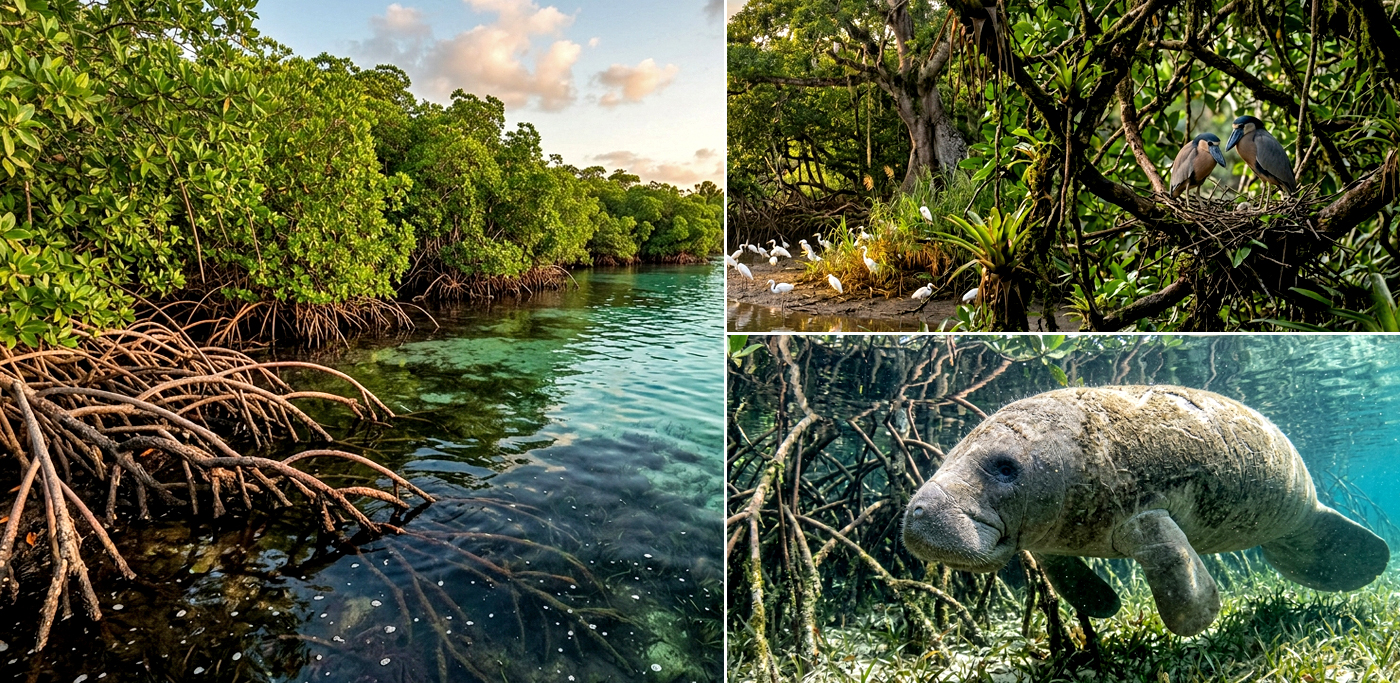
Mention Belize and most people picture the barrier reef or the jungle canopy. But some of the country’s most important ecosystems are the tangled, root-woven mangrove forests lining its coastline and cayes. Mangroves are unglamorous compared to coral reefs and Maya ruins, but they’re doing quiet, essential work and visiting them responsibly is one of the most rewarding low-impact experiences Belize offers.
Belize is home to four mangrove species — red, black, white, and buttonwood — covering roughly 3% of the country’s land area, concentrated along the coast and around the cayes. These forests aren’t just scenery. They’re nurseries.
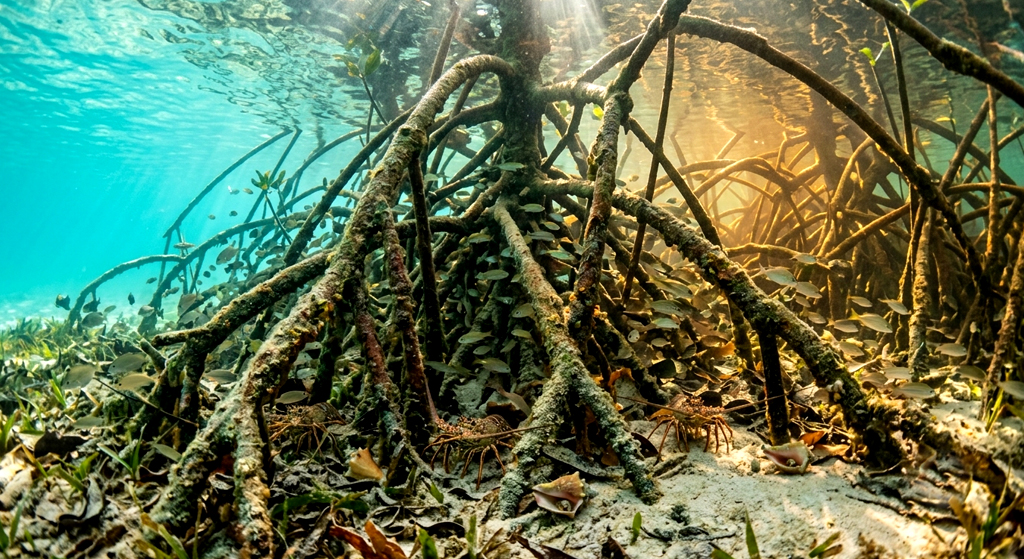
Nature’s Nursery: Mangrove root systems provide shelter for juvenile fish, spiny lobster, and conch before they migrate to the barrier reef as adults. Marine biologists widely credit healthy mangrove systems with supporting the productivity of Belize’s reef fisheries, since an estimated majority of commercially important reef fish species spend part of their life cycle sheltering among mangrove roots.
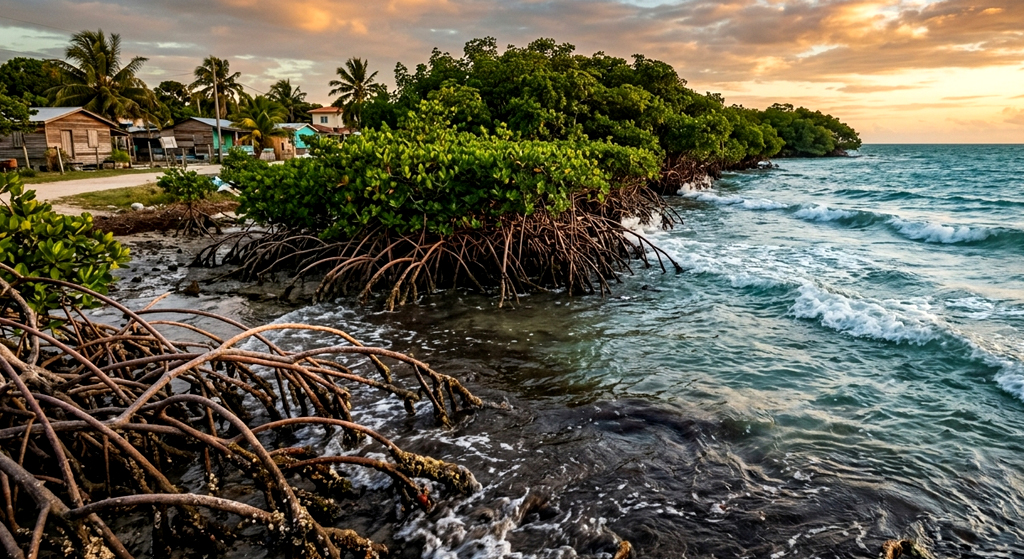
Coastal Protection: Mangroves also buffer the coastline against storm surge and hurricane damage, a critical function given Belize’s exposure to Caribbean storm systems. Their root networks stabilize sediment and reduce coastal erosion, protecting both natural habitats and the low-lying communities built near the shore.
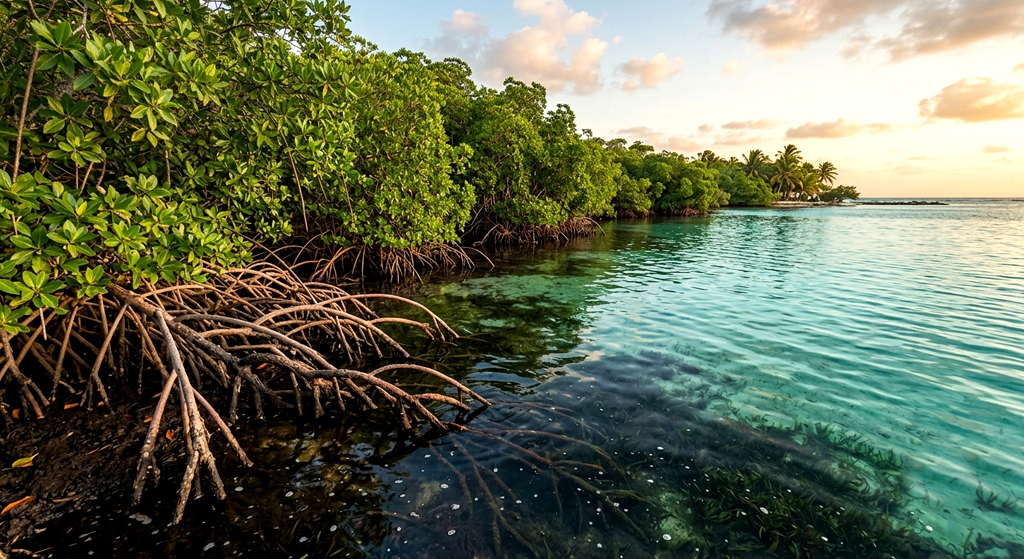
Carbon Storage: Mangrove forests store significantly more carbon per acre than most terrestrial forests, largely locked in the waterlogged soil beneath them. Conservation groups in Belize have increasingly highlighted this “blue carbon” value in advocating against mangrove clearing for coastal development.
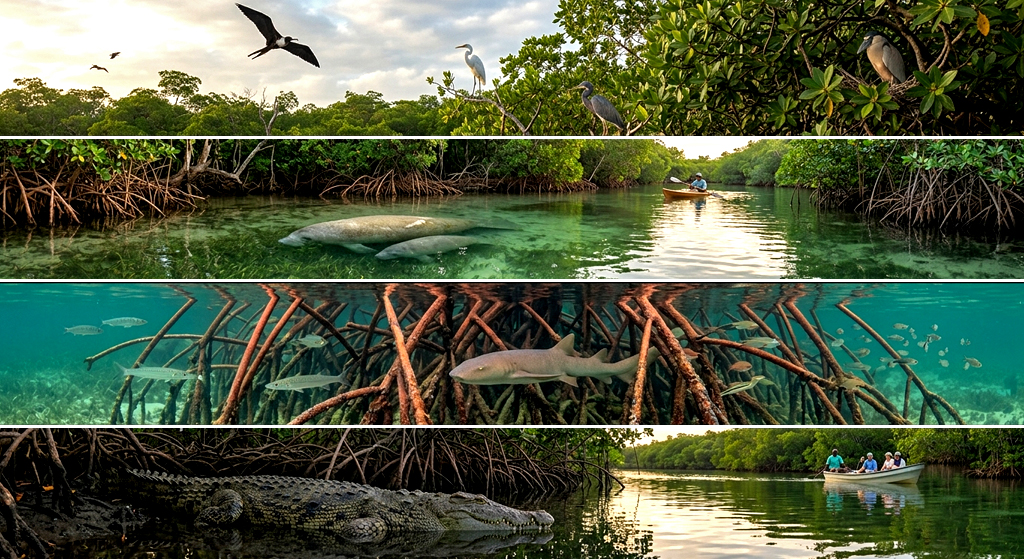
A mangrove tour moves at a slower, quieter pace than a reef excursion, and the payoff is different but just as rewarding.
Swallow Caye Wildlife Sanctuary: Just off Belize City and easily combined with a day trip from Caye Caulker or San Pedro, this protected sanctuary is one of the best places in the country to see manatees in their natural mangrove habitat.
Turneffe Atoll: Belize’s largest atoll includes extensive mangrove systems alongside its famous flats fishing and diving, making it a strong choice for travelers who want mangroves as part of a broader marine day.
Monkey River and Southern Lagoons: Near Placencia, the Monkey River area combines mangrove exploration with howler monkey sightings and crocodile spotting, run almost entirely by small local guide operators.
Pack reef-safe sunscreen (mineral-based, free of oxybenzone and octinoxate), a light long-sleeve layer for sun and insect protection, polarized sunglasses for spotting wildlife beneath the water’s surface, and a dry bag for cameras and phones if you’re kayaking.
Belize’s mangroves may not photograph as dramatically as the Great Blue Hole, but they’re the ecological backbone that makes the country’s reefs, fisheries, and coastline resilient. A responsible, guided mangrove tour offers a quieter, more intimate wildlife encounter than the reef ever could — just you, a kayak, and a heron taking flight overhead. Book a mangrove excursion with a certified local operator on your next trip, and you’ll come away understanding Belize’s coastline in a whole new way.