Quick Links: About Us - Contact Us
For bookings, call us at
+501 677-2900
Quick Links: About Us - Contact Us

Quick Links: About Us - Contact Us
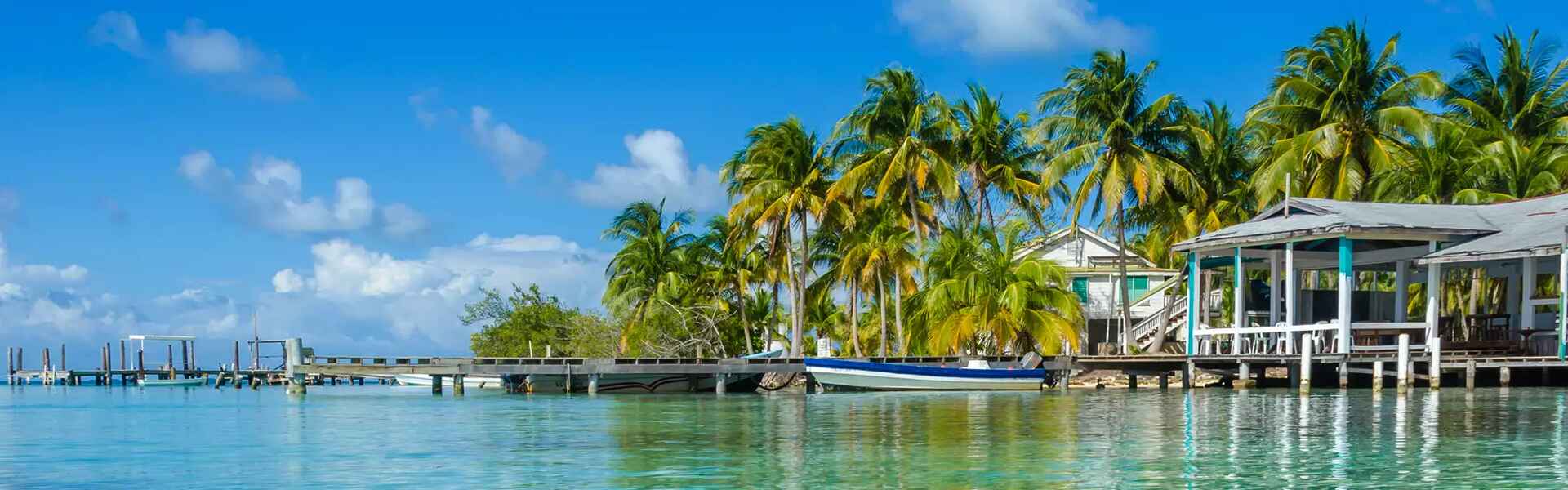

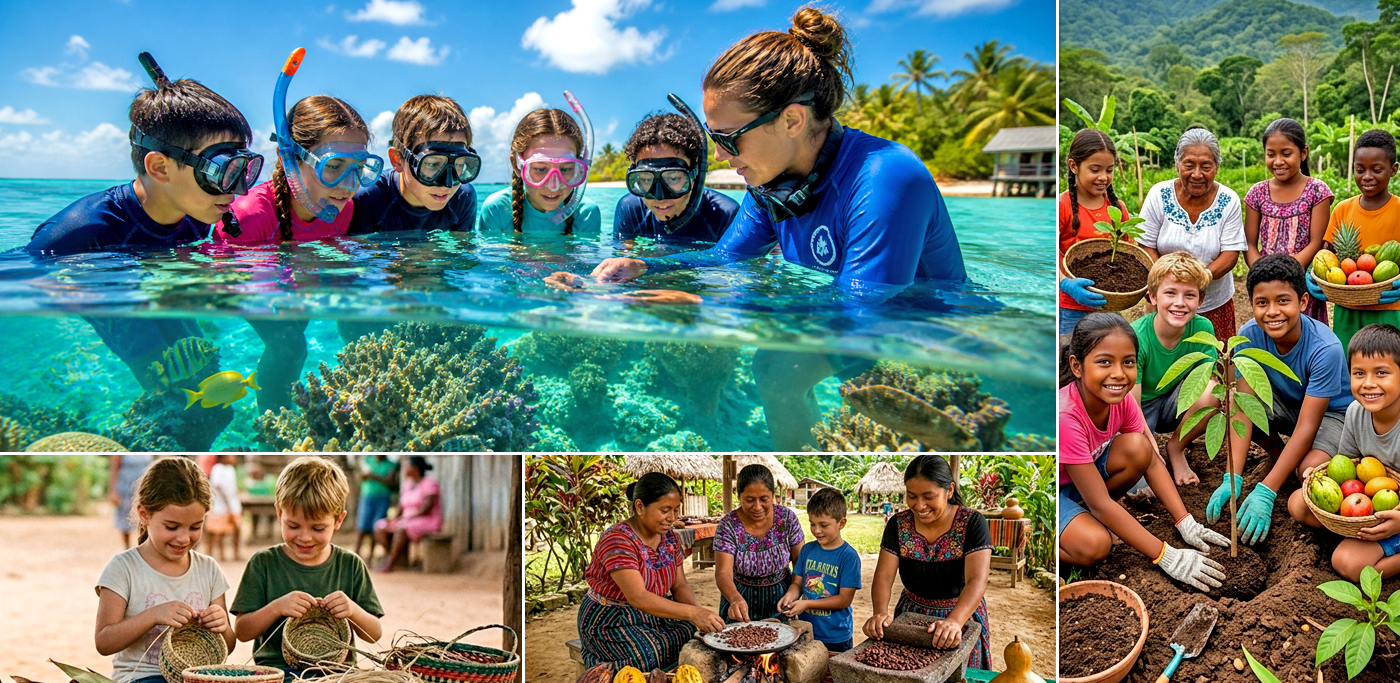
May marks the beginning of summer camp season in Belize and for families looking to combine meaningful education with adventure travel, the country’s growing network of children’s camps and youth programs offers experiences that are genuinely transformative. From marine biology day camps on the barrier reef to Maya cultural immersion programs in the Cayo District, Belize’s youth programming reflects the country’s extraordinary natural and cultural diversity.
Unlike the standard summer camp model, Belize’s camps place children directly in contact with living ecosystems — real coral reefs, functioning Maya communities, working organic farms, and active wildlife sanctuaries. The learning is visceral and immediate rather than classroom-theoretical: a child who has handled a sea cucumber, helped plant mangrove seedlings, or participated in a traditional Maya planting ceremony carries that knowledge permanently.
The English-speaking environment (Belize is the only Central American country where English is the official language) removes the language barrier that can make educational travel challenging for younger children in neighboring countries. Safety standards at established Belizean youth programs are generally excellent, and the country’s small size ensures that medical care is accessible from virtually any camp location.
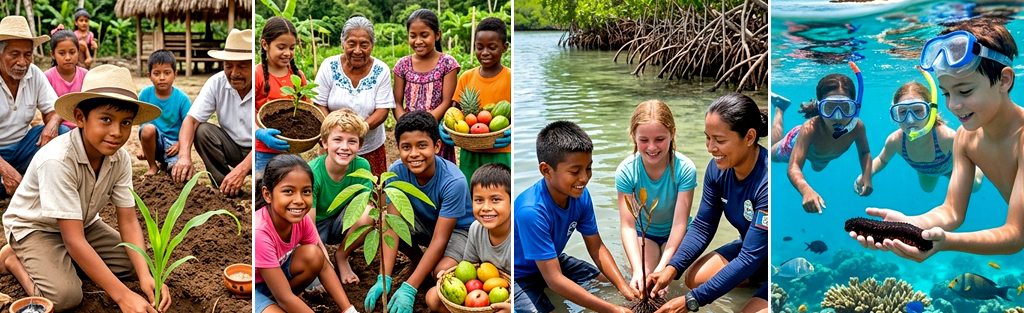
Several operators on Ambergris Caye run structured marine biology day camps for children aged 8–16 during the May–August summer period. These programs typically run Monday through Friday for one or two weeks, combining classroom sessions on reef ecology, fish identification, and marine conservation with daily snorkel or dive sessions on the barrier reef.
The Reef Conservation International (ReefCI) organization based at Turneffe Atoll runs youth conservation programs that include hands-on coral nursery work, fish population surveys, and marine debris collection. These are more demanding (minimum age typically 12, snorkeling competency required) but deliver genuine conservation science experience that colleges and universities increasingly recognize in admissions processes.
Approximate costs for reef-focused day camps: USD 150–300 per week for structured day programs. Overnight marine camp programs at atoll research stations run USD 600–1,200 per week, including accommodation, meals, and all activities. Book by March for May–June availability.
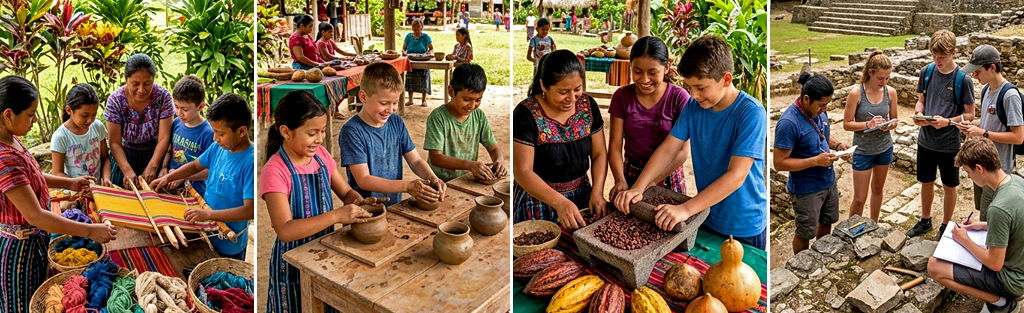
The Cayo District’s Maya-heritage communities offer remarkable cultural immersion programs for children aged 6–16. Programs run through organizations affiliated with the Belize Institute of Archaeology and several community-based tourism organizations in the San Ignacio area. Activities include traditional Maya craft workshops (weaving, pottery, natural dye preparation), agricultural participation in traditional milpa farming, chocolate-making using ancient methods, and guided archaeological exploration at manageable sites like Cahal Pech.
In the Toledo District, the Garifuna community programs based in Hopkins and Dangriga offer one-week youth cultural camps combining traditional drumming and dance instruction, Garifuna language basics, coastal ecology exploration, and community service activities. These programs are particularly valuable for children with Caribbean heritage connections and for those seeking genuinely intercultural experiences.
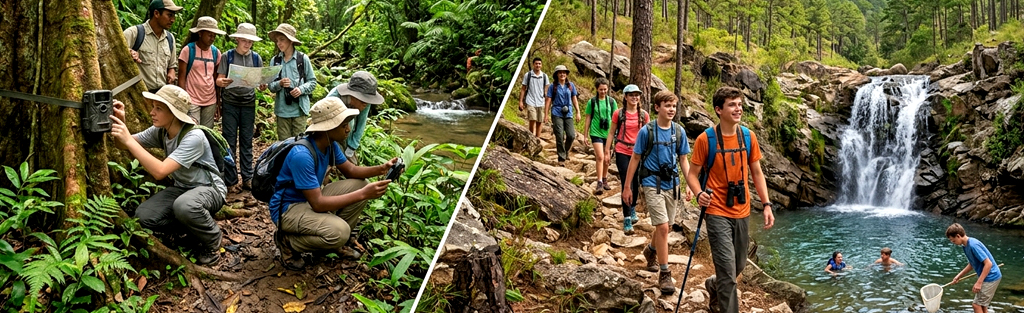
The Cockscomb Basin Wildlife Sanctuary operates youth ecology programs in partnership with several US-based conservation education organizations. Week-long programs (minimum age 10) introduce children to tropical forest ecology, wildlife monitoring techniques, and conservation biology through guided hikes, camera trap analysis, and stream ecology studies. The sanctuary’s research station provides basic but comfortable accommodation for overnight programs.
Mountain Pine Ridge eco-camps focus on highland forest ecosystems — distinctly different from the lowland jungle most visitors experience. Activities include pine forest birding, freshwater stream study, waterfall hiking, and night wildlife walks. Several small lodges in the Mountain Pine Ridge area run their own youth programs during the May–August period.
Regardless of camp type, the essential gear list is consistent: reef-safe mineral sunscreen SPF 50+ (mandatory for reef programs, where chemical sunscreens are prohibited); DEET or Picaridin insect repellent; lightweight quick-dry clothing in earth tones; closed-toe water shoes; a personal hydration bottle; a basic first aid kit with antihistamines and blister treatment; and a dry bag or waterproof case for electronics and documents. For reef programs, a well-fitting personal snorkel mask (rather than shared rentals) dramatically improves the snorkel experience.
Most Belize summer camp programs operate on weekly cycles beginning Monday. May programs run against reduced competition compared to the July–August peak, making May an excellent time to secure premium programs and accommodation. Contact programs directly (rather than through third-party booking platforms) for the most current availability and direct booking discounts of 5–15%. Transportation from Philip Goldson International Airport to most camp locations is available through organized transfers arranged at booking.