Quick Links: About Us - Contact Us
For bookings, call us at +501 677-2900
Quick Links: About Us - Contact Us

Quick Links: About Us - Contact Us
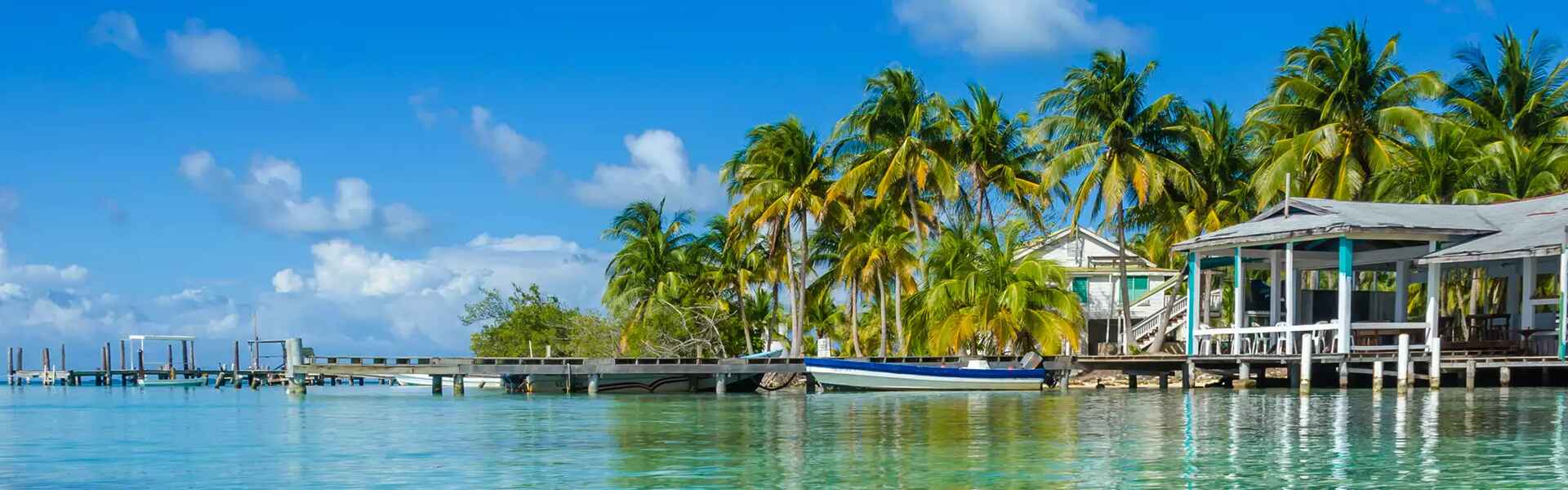

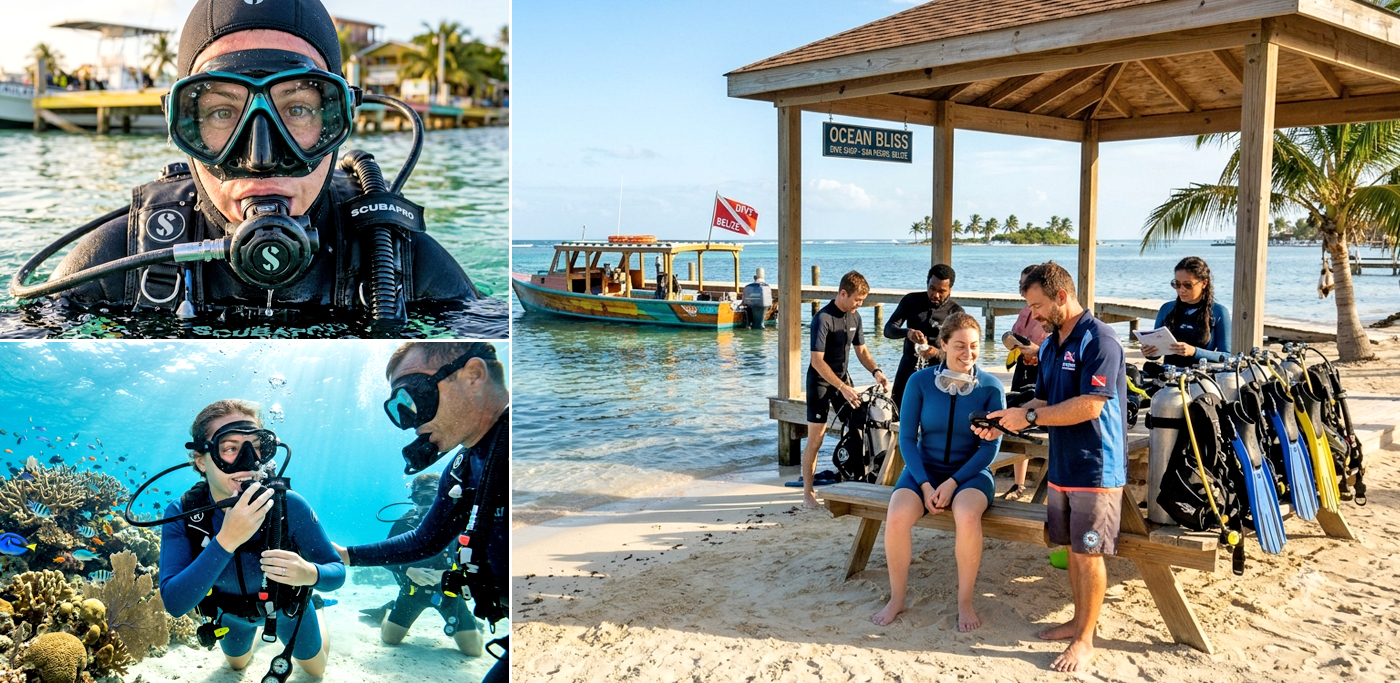
Learning to dive in Belize gives travelers the opportunity to combine scuba training with access to Caribbean reef environments. However, choosing where to complete an Open Water course matters. San Pedro, Caye Caulker and Placencia each offer different accommodation settings, dive-shop options and access to marine locations.
For beginners, the best choice is not necessarily the cheapest course. Instructor qualifications, class size, training conditions, equipment, certification fees and the number of days available should all influence the decision.
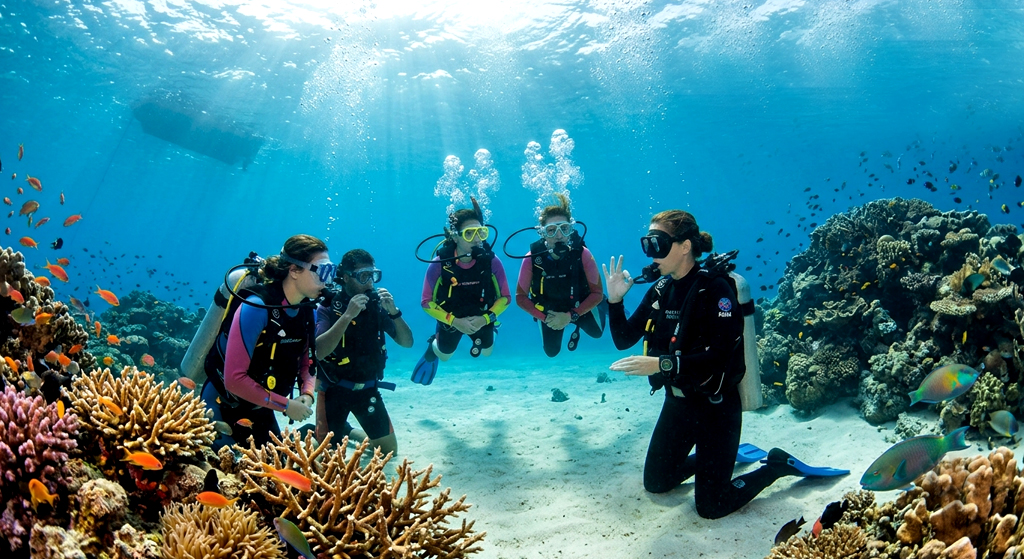
The Open Water Diver course is an entry-level scuba certification program. It teaches beginners how to use scuba equipment, understand basic diving principles, manage underwater situations and complete supervised training dives.
For a PADI Open Water Diver course, the training includes three main components:
PADI describes the Open Water course as the foundation for independent recreational diving within the certification’s limits.
The exact schedule depends on the training center, course format, student progress and local conditions. A traditional course may take several days, while an eLearning or referral arrangement can move some theory and pool training outside the destination. Do not book a departure flight immediately after your final planned training session without confirming the instructor’s schedule and any necessary contingency time.
Comparison factor | San Pedro | Caye Caulker | Placencia |
General setting | Larger island town | Smaller island community | Mainland coastal village |
Training options | Multiple published dive-center options | Several dive operators | Dive centers serving southern Belize |
Reef access | Ambergris Caye reef areas | Nearby reef and atoll excursions | Southern Belize reef destinations |
Accommodation | Broad range of island accommodation | Smaller-island accommodation | Hotels and guesthouses |
Best suited for | Travelers wanting several provider options | Travelers seeking a compact island base | Travelers exploring southern Belize |
Main trade-off | Busy tourism environment | Fewer accommodation and service choices than larger destinations | Travel planning between mainland and offshore locations |
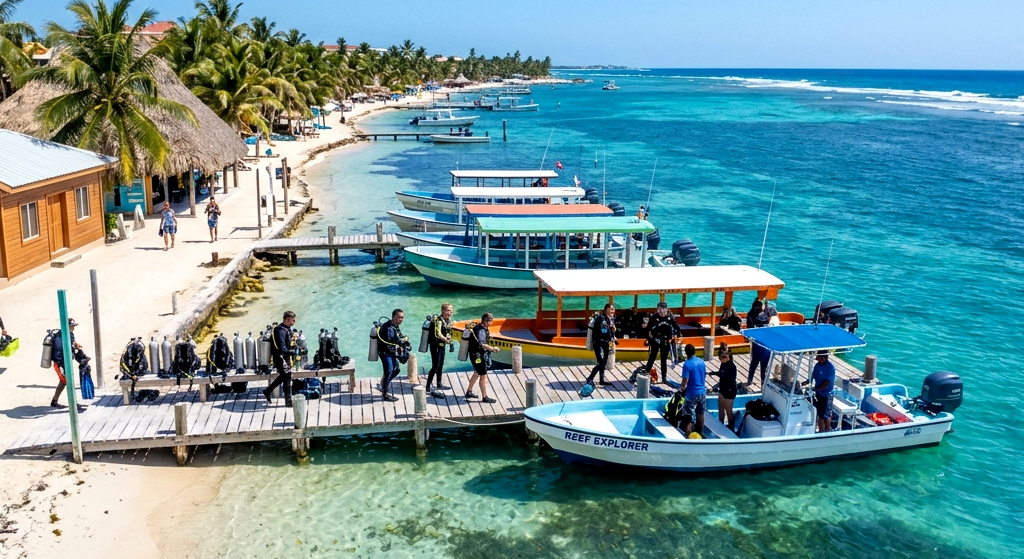
San Pedro is a practical starting point for travelers who want to compare multiple dive centers. Its location on Ambergris Caye provides access to reef excursions and established marine tourism infrastructure.
Before selecting a provider, compare:
San Pedro is particularly useful for travelers who want to combine diving with other island activities.
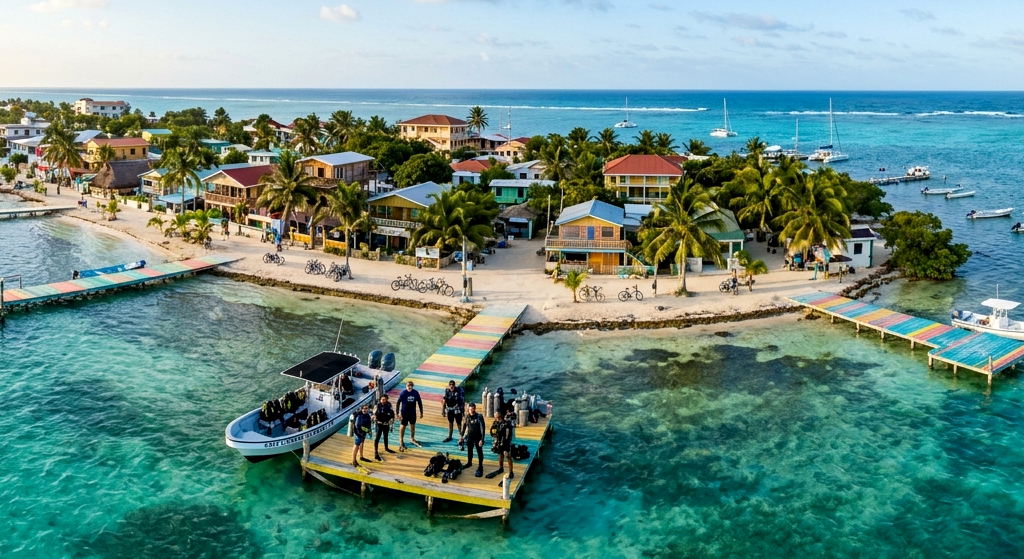
Caye Caulker offers a different atmosphere from San Pedro. Travelers who prefer a smaller island environment may find it a suitable place to organize their course. Published course information from Caye Caulker dive centers demonstrates that both standard training and eLearning-supported arrangements are available. One local operator publishes a staged training structure involving theory, confined-water sessions and open-water dives. The main consideration is whether your chosen dates allow enough time for training and weather-related adjustments.
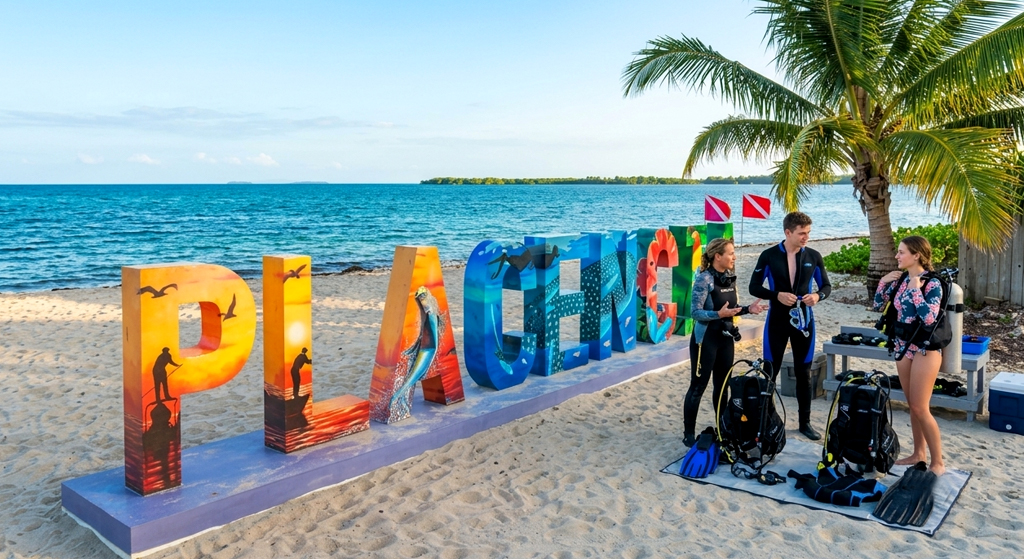
Placencia is a useful base for visitors exploring southern Belize. It can suit travelers who want to combine a diving course with mainland activities, coastal accommodation and excursions toward southern marine areas. However, ask the dive center where the actual training dives take place. The destination name alone does not tell you whether all sessions occur close to the village or require additional boat travel.
Course prices vary according to the provider and what is included. The published prices reviewed in September and October 2026 show differences between San Pedro, Caye Caulker and Placencia providers. A September 24, 2026 comparison of published dive-center prices found Open Water course listings broadly between approximately US$460 and US$ 550 before considering differences in tax and inclusions. The comparison also found that some providers list taxes separately while others advertise inclusive prices.
This is a comparison of published listings, not a guaranteed November quotation. (Source: https://belizetravelblog.com/belize-diving-certification-cost/ )
Cost component | Why it matters |
Instructor training | Essential part of the certification |
Confined-water sessions | Required skills practice |
Open-water dives | Practical certification training |
Equipment rental | Can significantly affect the total cost |
Digital learning materials | May be included or separately charged |
Certification processing | Check whether the card fee is included |
Marine reserve fees | May be additional |
Taxes | Can change the final payment |
Transportation | May be relevant for distant training sites |
A course advertised at a lower price may cost more after additional charges are added. Ask for a written breakdown before paying.
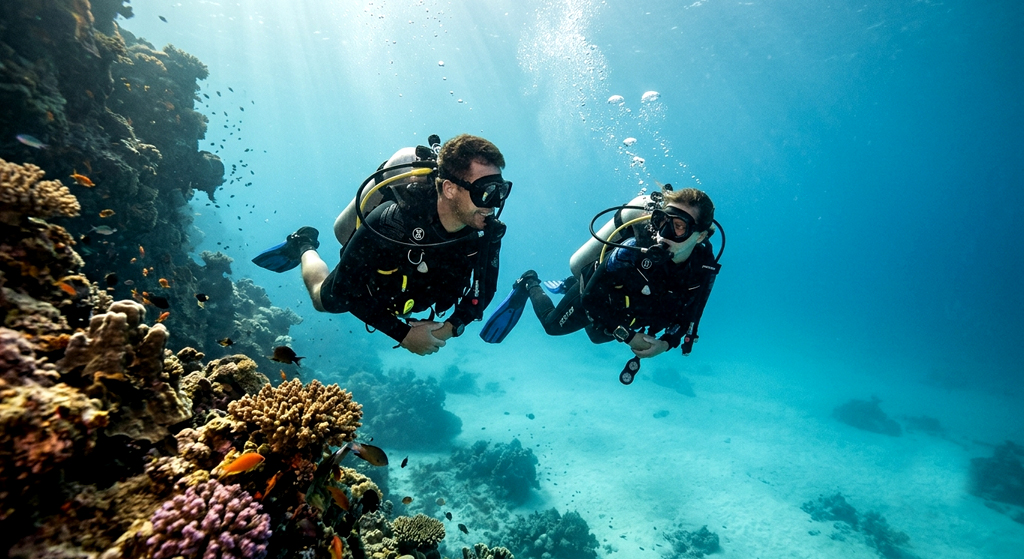
Scuba diving requires physical readiness and the ability to remain comfortable in water. PADI’s guidance specifies a minimum age of 10 for Open Water training, with junior certification arrangements for younger students. Students also complete swimming and floating assessments.
The PADI medical questionnaire is important. Certain medical answers require a physician’s assessment before training can proceed. Do not conceal medical information to avoid a delay. PADI’s current medical questionnaire explains that diving-related health concerns should be assessed by an appropriate medical professional.
Participant Questionnaire
Before booking, ask:
Ordinary travel insurance does not automatically cover every scuba-related incident. Review whether your policy includes recreational scuba diving, the certification level involved, depth limits, emergency medical treatment and evacuation. Also check any waiting periods or exclusions.
Before paying, confirm that the dive center and instructor are authorized to provide the certification you want. For a PADI course, ask for the instructor’s current PADI professional status and the center’s current affiliation.
Other recognized training organizations have their own standards, so do not assume that every course advertised as an Open Water certification follows identical training and certification procedures.
Use this checklist:
Training schedules may change because of weather, sea conditions, equipment problems or student progress. Ask the provider whether missed dives can be rescheduled and what happens if the weather prevents open-water training. If you are working with a fixed departure date, consider completing theory before arrival through an approved eLearning arrangement. Do not compress training simply to fit a flight or ferry departure.
San Pedro, Caye Caulker and Placencia all offer different advantages for travelers interested in learning to dive in Belize. San Pedro is worth comparing when you want several provider options. Caye Caulker offers a smaller island setting, while Placencia is convenient for exploring southern Belize.
The right course is the one that gives you adequate training time, qualified instruction, transparent pricing and a clear certification pathway.