Quick Links: About Us - Contact Us
For bookings, call us at
+501 677-2900
Quick Links: About Us - Contact Us

Quick Links: About Us - Contact Us

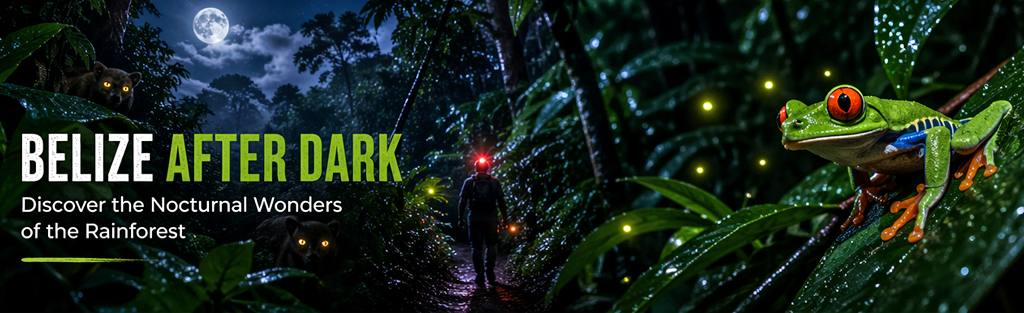
Belize by day is extraordinary. Belize after dark is something else entirely. The country’s tropical jungle transforms at night into a world of sounds, movements, and biological activities that daylight visitors never experience—and April’s early rains dramatically amplify this nocturnal world as moisture activates organisms that remain dormant through the dry season. Night wildlife tours in Belize in April rank among the most memorable wildlife experiences in all of Central America.
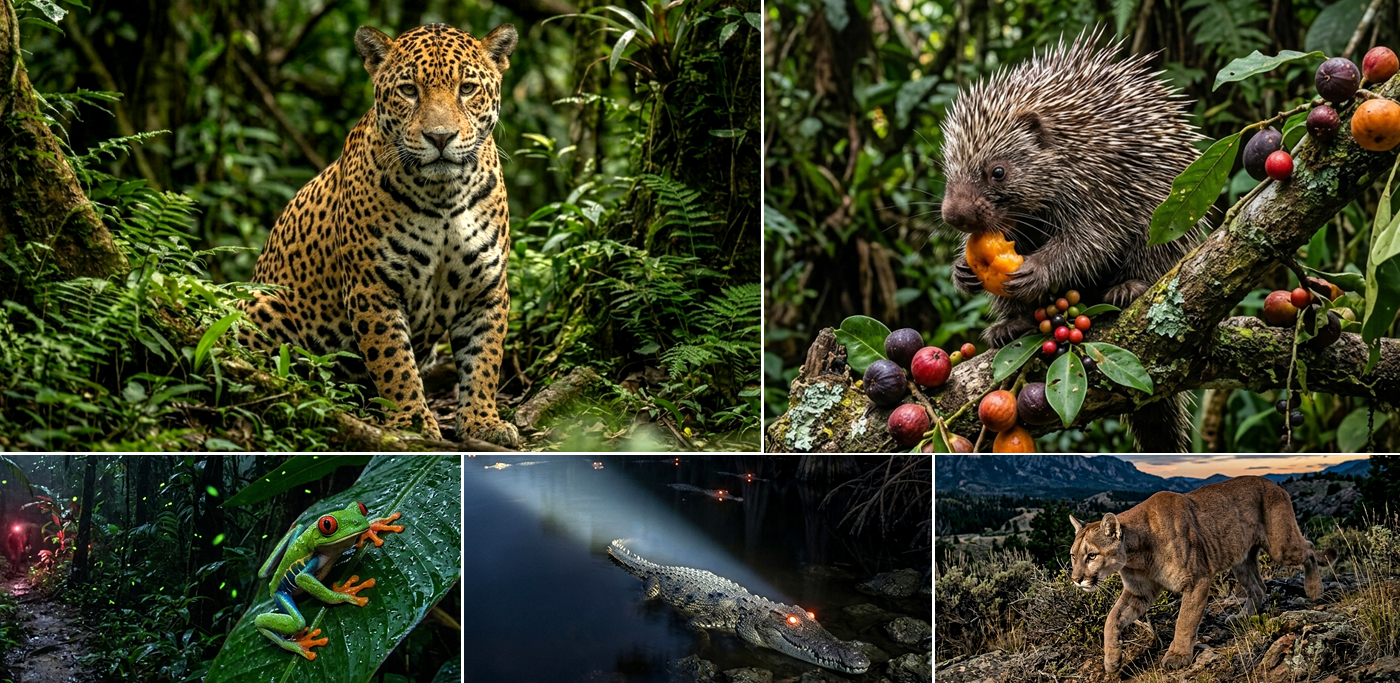
The onset of the rainy season triggers remarkable biological activity in Belize’s ecosystems. Tree frogs emerge in spectacular diversity—species that are invisible during the dry months appear on vegetation surfaces in extraordinary numbers after the first rains, their calls creating overlapping choruses of extraordinary complexity. The Morelet’s Treefrog, Red-eyed Treefrog, and Loquacious Treefrog are all April regulars in appropriate habitat, and night walks in the Cayo District after rain are genuinely astonishing in their frog diversity.
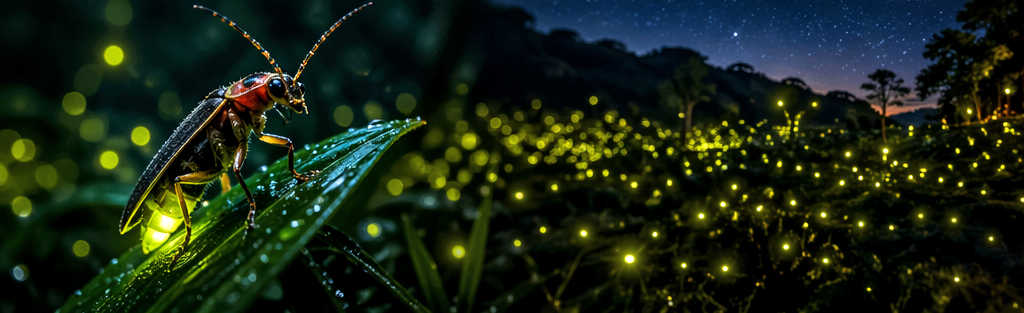
Fireflies—barely visible in the dry season—produce their first spectacular displays of the year in late April as moisture increases and their bioluminescent courtship begins. In open areas of the Cayo District and along river corridors throughout the country, firefly displays on April nights can fill entire meadows and forest margins with pulsing green light in a spectacle that seems genuinely magical.
Nocturnal mammals become more active: kinkajous, porcupines, pacas (called gibnuts locally), and the occasional ocelot or puma are all more detectible on spotlighting tours in April as they respond to the abundance that early rain brings. And the nocturnal insects—the enormous Hercules beetles, exotic stick insects, and brilliant-eyed huntsman spiders—emerge in profusion.
Chaa Creek’s resident naturalist guides offer nightly spotlighting walks through the resort’s private nature reserve—one of the most professionally organized night wildlife experiences in Belize. The guides use low-powered red-filtered headlamps and spotting lights to minimize disturbance while maximizing wildlife encounters. Expect kinkajou, paca, various frog species, and a remarkable variety of nocturnal insects. Cost: Approximately USD 35–50 per person, included in some all-inclusive packages.
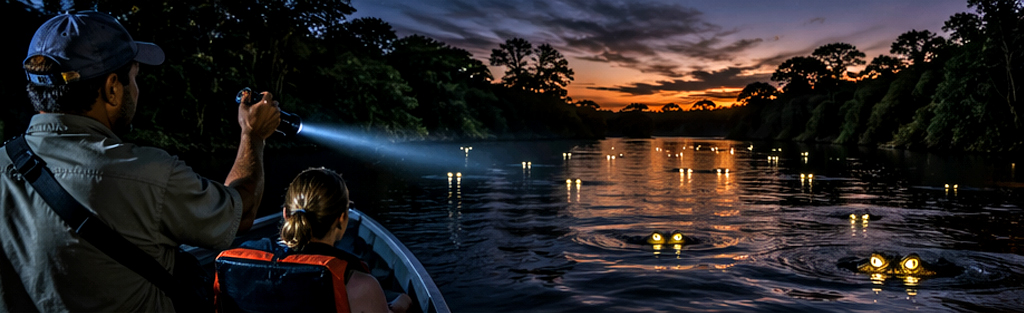
River spotlighting tours on the New River after dark reveal a completely different world from the daytime experience. American Crocodiles—present but cryptic in daylight—become dramatically visible as their eyes reflect spotlighting beams in brilliant orange-red across the water surface. The experience of a river full of crocodile eye-shine is simultaneously exhilarating and primordially impressive. Local guides in Orange Walk arrange these tours; the cost is approximately USD 60–90 per person including transport.
The transition zone between pine savanna and broadleaf forest in the Mountain Pine Ridge area produces spectacular firefly displays from late April onward. The Pook’s Hill Lodge and Chaa Creek both have access to meadow habitats ideal for firefly observation. These are self-guided or lightly guided experiences—no special equipment required beyond a low-powered headlamp and a willingness to stand quietly in the darkness for 20–30 minutes.
The Cockscomb Basin Wildlife Sanctuary permits access for night walks with a licensed guide. The reserve’s primary focus as the world’s jaguar reserve makes jaguar spotlighting the headline activity—and while success is never guaranteed (jaguars are elusive by nature), the combination of jaguar track evidence, the extraordinary soundscape of the nocturnal jungle, and the near-certainty of spectacular frog diversity make this one of Belize’s most thrilling nature experiences.
Always use a licensed guide for night wildlife walks—not because the wildlife poses genuine danger, but because navigating unfamiliar jungle terrain in darkness without a guide creates real fall-and-injury risks. Belize’s venomous snake species (particularly the fer-de-lance/Tommy Goff) are most active at night and require guide expertise for safe navigation. Never walk off marked paths without a guide present.
As the rainy season approaches, Belize’s wildlife becomes more active at night, offering unique opportunities for exploration. Guided night tours allow you to safely observe nocturnal species that remain hidden during the day. These experiences add a new dimension to your trip, making it more adventurous and memorable. It’s an activity worth considering for those looking to go beyond typical sightseeing.