Quick Links: About Us - Contact Us
For bookings, call us at
+501 677-2900
Quick Links: About Us - Contact Us

Quick Links: About Us - Contact Us

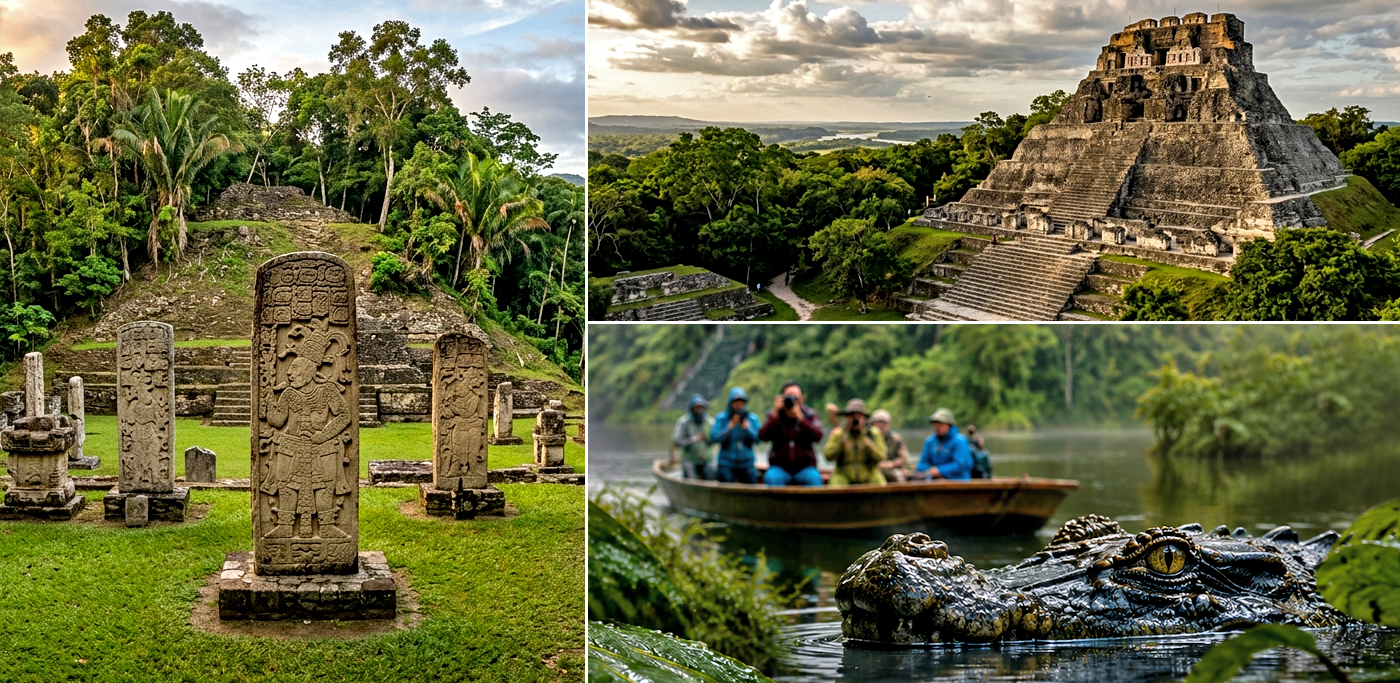
Belize sits at the heart of the ancient Maya world, home to hundreds of documented archaeological sites, many still partially or entirely unexcavated beneath jungle canopy. For travelers interested in history alongside natural beauty, a visit to even one or two of the country’s major ruin sites adds real depth to a Belize itinerary. Here’s a guide to the most significant sites and what to expect at each.
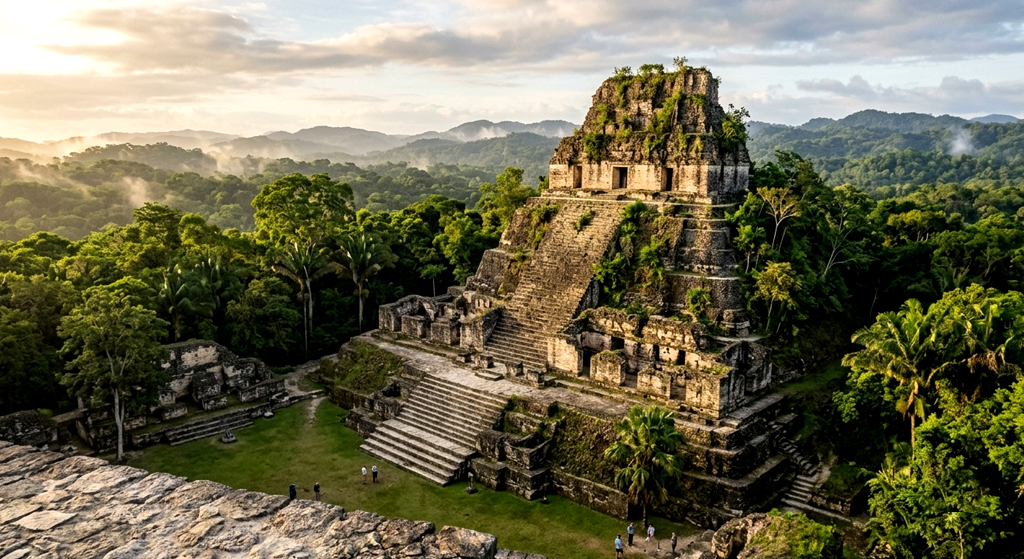
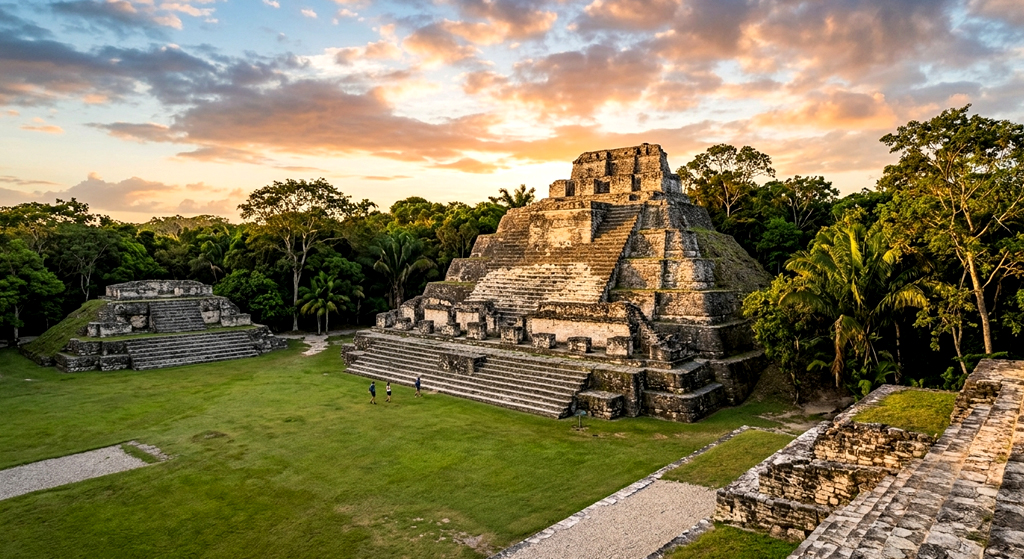
Belize’s largest known Maya site, Caracol was once home to an estimated population larger than modern-day Belize City at its peak, and its central pyramid, Caana (“Sky Palace”), remains the tallest man-made structure in the country. Located deep within the Chiquibul Forest Reserve near the Guatemala border, Caracol requires a substantial drive, often with a required guide or convoy escort for security reasons, but rewards visitors with a genuinely remote, jungle-shrouded ruin experience largely free of crowds. Ongoing excavation continues to reveal new structures, and much of the site remains unexcavated beneath the surrounding forest.
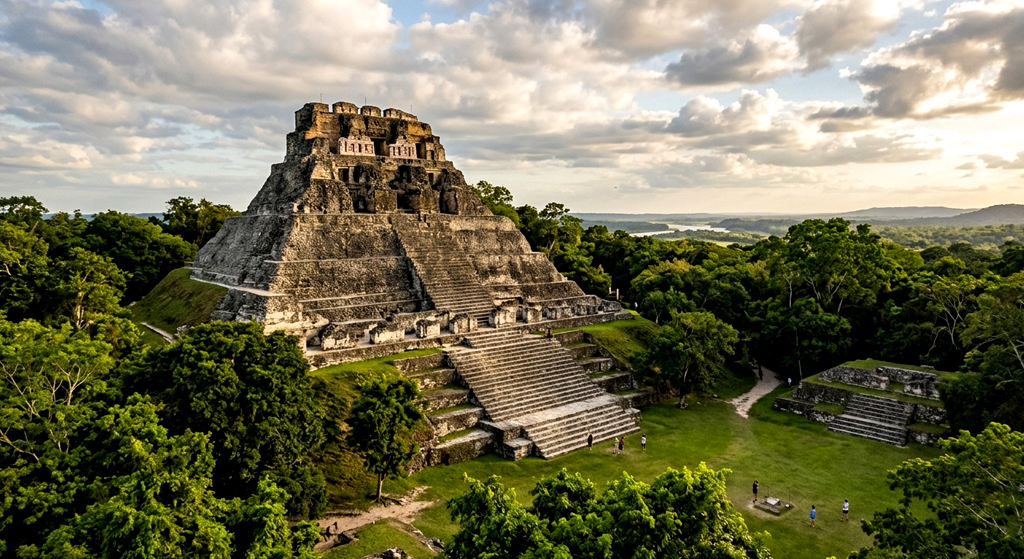
One of Belize’s most accessible and visited ruin sites, Xunantunich sits just outside San Ignacio and is reached via a small hand-cranked ferry crossing the Mopan River, adding a bit of charm to the visit itself. Its central structure, El Castillo, remains one of the tallest buildings in Belize and features a partially restored stucco frieze depicting astronomical and mythological imagery. The site’s manageable size and proximity to San Ignacio make it a popular half-day excursion, often paired with a stop at a nearby cave or waterfall.
Located a relatively short drive north of Belize City, Altun Ha is best known for the discovery of a carved jade head representing the Maya sun god Kinich Ahau, among the largest carved jade objects ever found in the Maya region. The site’s proximity to Belize City makes it a popular stop for cruise ship excursions and travelers with limited time, and its relatively compact layout allows for a satisfying visit in an hour or two.
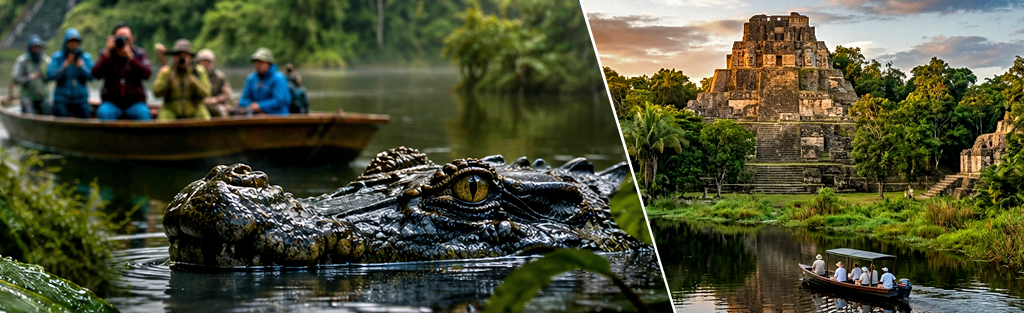
Meaning “submerged crocodile” in the Yucatec Maya language, Lamanai stands out for its exceptionally long history of continuous occupation, from the pre-classic period through Spanish colonial contact, evidenced by a colonial-era church built near the site. Reaching Lamanai typically involves a scenic boat ride up the New River, passing through wetland habitat rich with birdlife and the occasional crocodile sighting, making the journey itself part of the appeal.
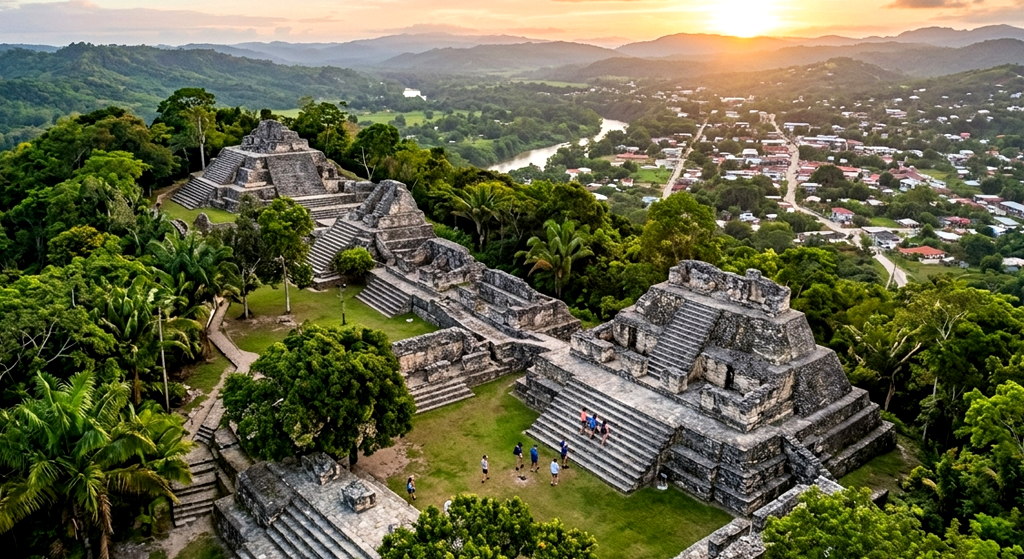
Situated on a hilltop overlooking San Ignacio, Cahal Pech offers one of the most convenient ruin visits in the country, reachable within minutes from most Cayo District accommodations. While smaller in scale than Caracol or Xunantunich, its elevated setting and well-preserved plaza structures make it a worthwhile stop, particularly for travelers short on time or looking for an easy add-on to a San Ignacio-based itinerary.
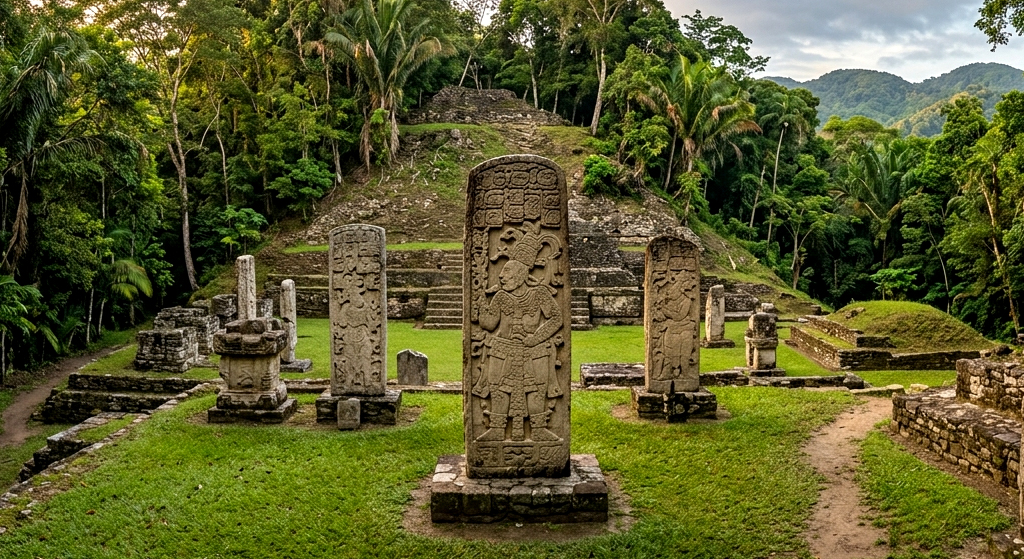
Located in the Toledo District in southern Belize, Nim Li Punit is known for its collection of carved stelae, stone monuments depicting rulers and historical events, some of the best preserved examples in the country. The site sees considerably fewer visitors than those further north, appealing to travelers seeking a quieter archaeological experience alongside a visit to the less-touristed Toledo region.
Also in the Toledo District, Lubaantun is notable for its unusual construction technique, using precisely cut stone blocks without mortar, and for being the site associated with the famous (and now largely debunked as ancient) “Crystal Skull” discovery. Its remote setting and relatively unrestored condition give it a distinctly different atmosphere from more heavily reconstructed sites like Xunantunich.
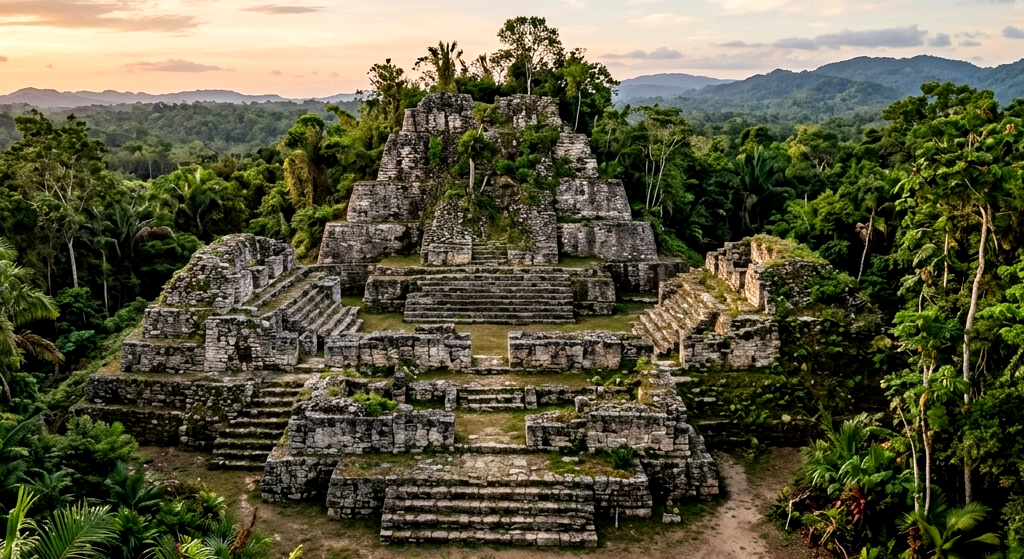
Travelers based in the Cayo District around San Ignacio have easy access to Xunantunich and Cahal Pech, with Caracol requiring a longer, guided day trip given its remote location. Those based near Belize City can easily reach Altun Ha, while Lamanai requires a dedicated river excursion typically booked as a full-day tour. Travelers heading south to Placencia or the Toledo District can add Nim Li Punit and Lubaantun to their itinerary, both requiring less advance planning given lower visitor volume.
Which Maya ruin site is easiest to visit independently? Xunantunich and Cahal Pech are both well-marked, close to San Ignacio, and manageable without a guided tour, though guides add valuable historical context.
Do I need a special permit to visit Caracol? No special permit is required, but many visitors join a guided tour due to the site’s remote location and the recommended security convoy along certain access roads.
Are Belize’s Maya ruins suitable for children? Most sites, particularly Xunantunich and Altun Ha, are manageable for families, though the steep stone steps at some structures require supervision for younger kids.
Belize’s Maya ruins offer a remarkable range of experiences, from the easily accessible plazas of Cahal Pech to the remote, jungle-shrouded grandeur of Caracol. Each site tells a different chapter of the region’s ancient history, and with a bit of planning, even a short Belize trip can include a meaningful window into one of the most sophisticated civilizations of the ancient Americas.