Quick Links: About Us - Contact Us
For bookings, call us at
+501 677-2900
Quick Links: About Us - Contact Us

Quick Links: About Us - Contact Us

The best photography opportunities during Belize’s National Celebrations come from arriving early to secure a spot along the main Belize City parade routes, positioning near elevated or open vantage points for wide shots, and shooting in the early evening when costume colors and string lighting stand out most. Protecting gear from humidity and occasional rain is a practical concern throughout.
Belize City’s National Month parades draw dense crowds, and by the time a parade actually starts, prime viewing spots along the main route are typically already claimed. Arriving well ahead of the scheduled start, and scouting the route in advance if possible, makes a bigger difference to photo quality than gear choice for most visitors, since even an excellent camera can’t compensate for a blocked or distant view.
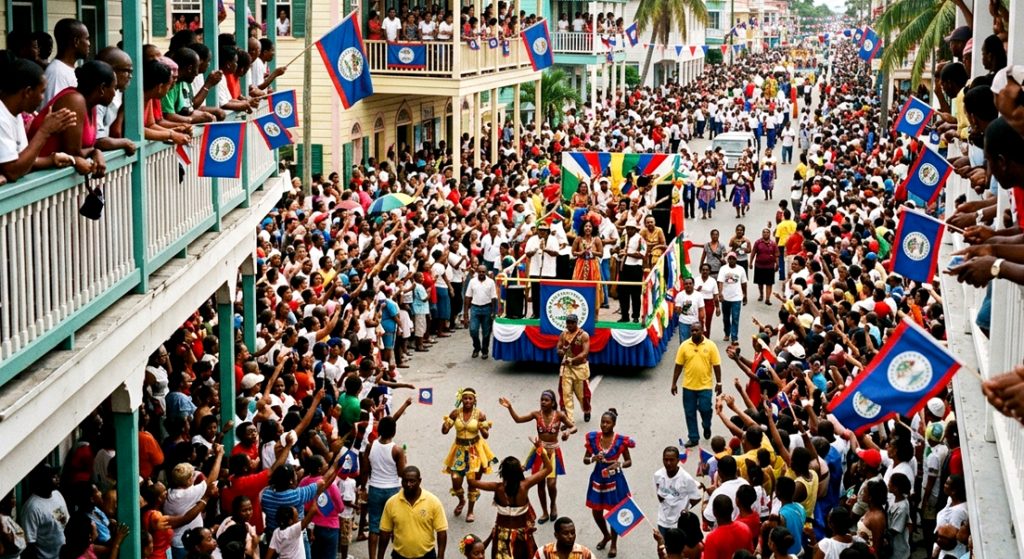
Open stretches of the parade route, away from the densest crowd clusters near the start, tend to give more shooting room and a cleaner background. Slightly elevated positions, a curb, a low wall, or any modest rise, help clear the heads of people standing in front of you, which is one of the more common frustrations of ground-level parade photography. Corners along the route, where the parade naturally slows to turn, often produce better shots than straight stretches, since performers tend to face more directly toward spectators while navigating a turn.
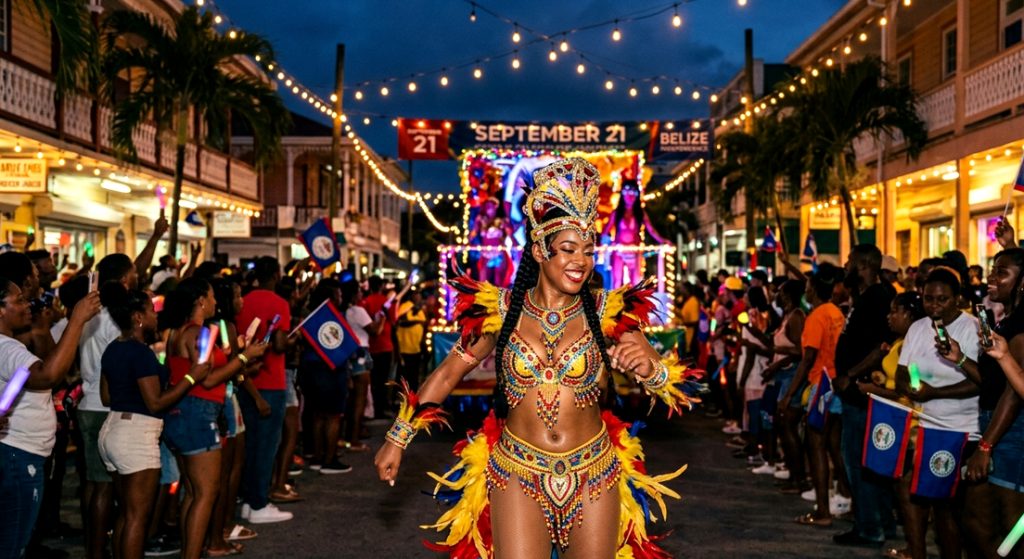
Midday shooting in Belize’s tropical sun can produce harsh shadows and washed-out colors, particularly on brightly colored Carnival costumes. Overcast conditions, common in September’s green season, can actually work in a photographer’s favor by softening light and reducing harsh contrast. Evening events, including some Independence Day and Battle of St. George’s Caye Day observances, offer a different opportunity: string lighting and artificial illumination against the evening sky can produce more dramatic images than daytime shots, particularly for wider crowd and stage photography.
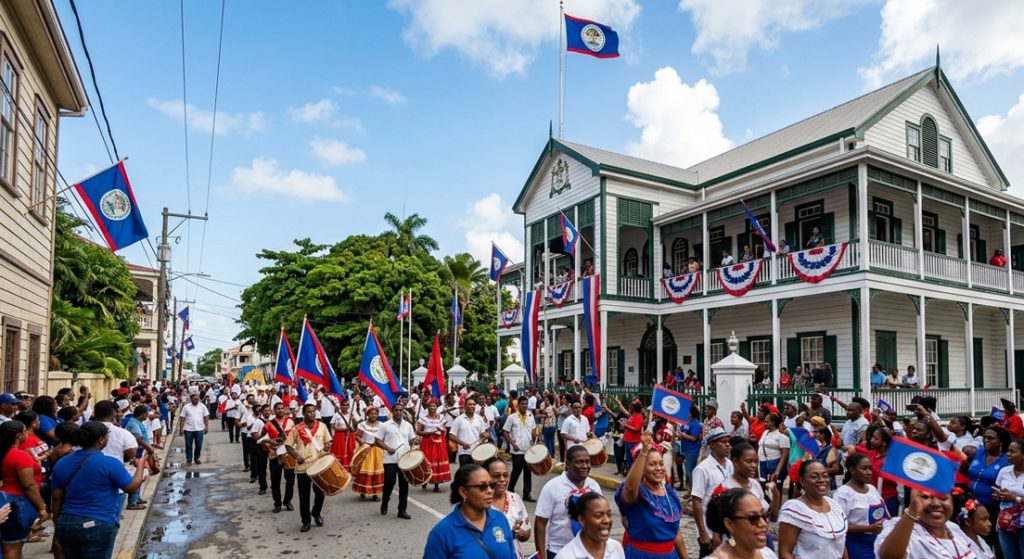
Belize City’s historic buildings and monuments tied to National Month, including sites associated with the Battle of St. George’s Caye commemorations, offer useful backdrops that add local context to event photography rather than generic crowd shots. Framing a shot to include one of these landmarks, even partially, helps a photo read as distinctly Belizean rather than a generic street-festival image.
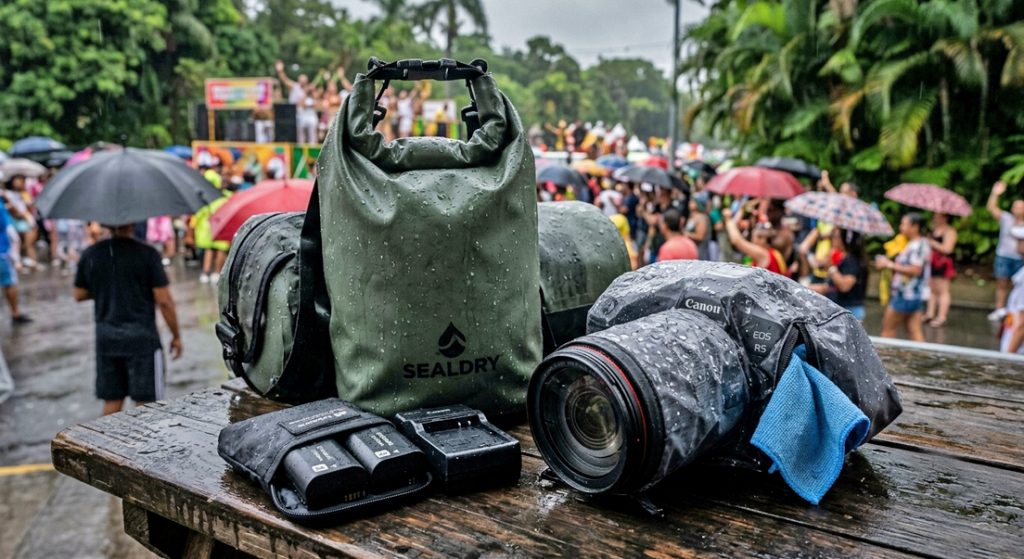
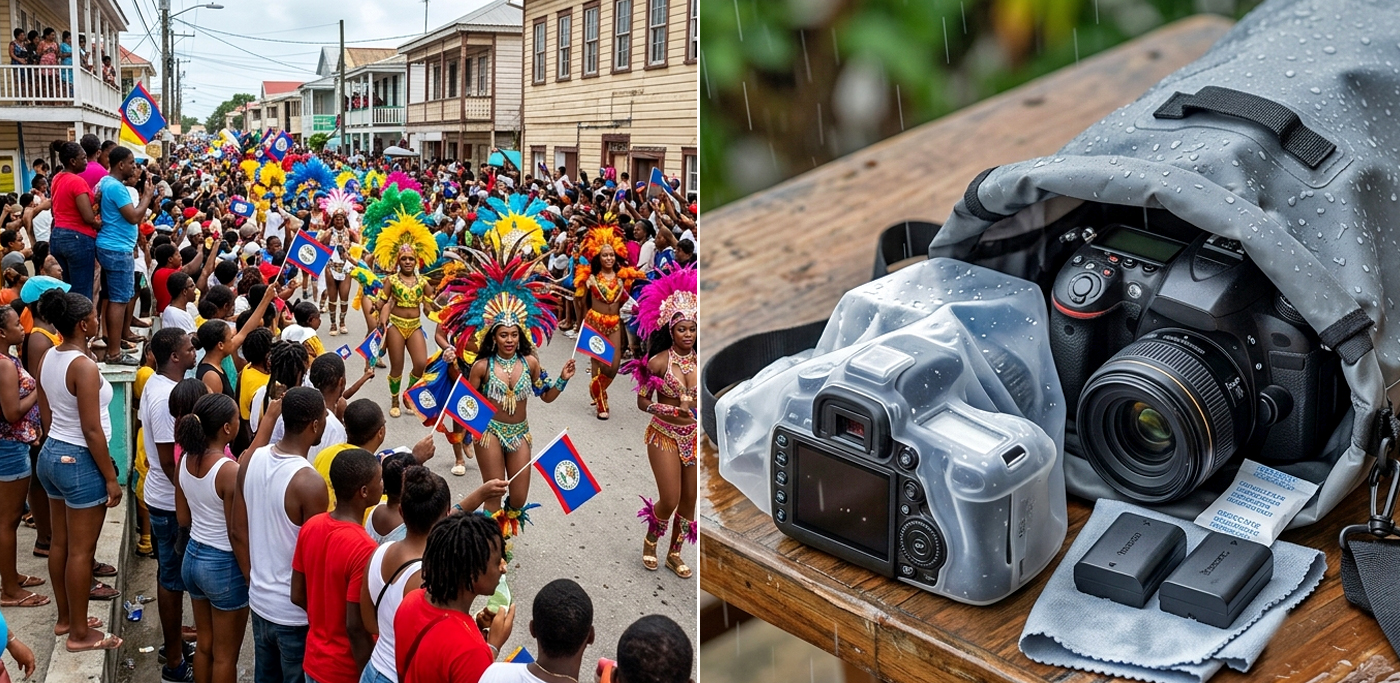
Given September’s humidity and rain risk, a simple rain cover or dry bag for camera equipment is worth carrying even on days without rain in the forecast, since showers can develop quickly during green season. Lens condensation, caused by moving between air-conditioned interiors and Belize’s outdoor humidity, is also worth planning for by allowing gear to acclimate before shooting. A microfiber cloth kept in an easily accessible pocket is useful for quickly clearing humidity fog from a lens between shots. Spare batteries are also worth carrying, since heat tends to drain them faster than in cooler climates, and a long parade day can run through more power than expected.
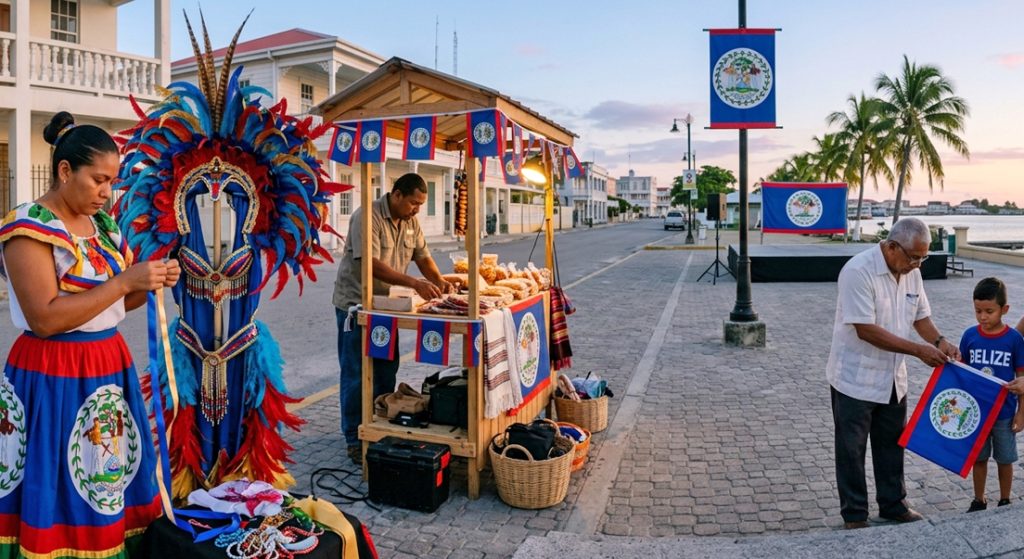
Some of the most interesting National Month images come from outside the main parade itself, vendors setting up stalls in the early morning, performers adjusting costumes before stepping off, families gathering in public squares ahead of a flag-raising ceremony. These quieter moments tend to be less photographed and often convey more about how Belizeans actually experience the holiday than a wide shot of the parade at full swing. Arriving an hour or two before an event gives you access to this window before the crowds arrive.
Carnival participants and performers are generally receptive to being photographed, especially in costume, but asking first, even with a simple gesture, is good practice, particularly for closer or more personal shots rather than wide crowd photography. This is especially relevant around community cultural performances tied to National Month more broadly, where performers may appreciate being asked rather than simply photographed as part of the scenery.
A smartphone with a good camera is perfectly capable of capturing strong Carnival and parade photography, particularly given how much of the appeal comes from color, motion, and crowd energy rather than technical precision. Photographers bringing a dedicated camera may want to prioritize a versatile zoom lens over multiple prime lenses, since crowd conditions rarely allow time to swap equipment mid-parade.
Carnival photography benefits from more than just still portraits of costumes; a faster shutter speed freezes the movement of dancers and drummers mid-motion, while a deliberately slower shutter on a stabilized shot can convey a sense of the parade’s energy through blur. Wide shots that include the surrounding crowd, rather than isolating a single performer, often do a better job of conveying what the event actually feels like to someone who wasn’t there.
If you plan to post Carnival or National Month photos publicly, crediting the specific event and, where known, the performing troupe or group adds useful context and is a small courtesy to the people who spent weeks preparing for the event. Avoiding captions that reduce the celebration to a generic “tropical festival” description, and instead naming Belize, the specific holiday, and where relevant the troupe, helps represent Belize’s specific traditions accurately to anyone viewing the photos later.