Quick Links: About Us - Contact Us
For bookings, call us at +501 677-2900
Quick Links: About Us - Contact Us

Quick Links: About Us - Contact Us

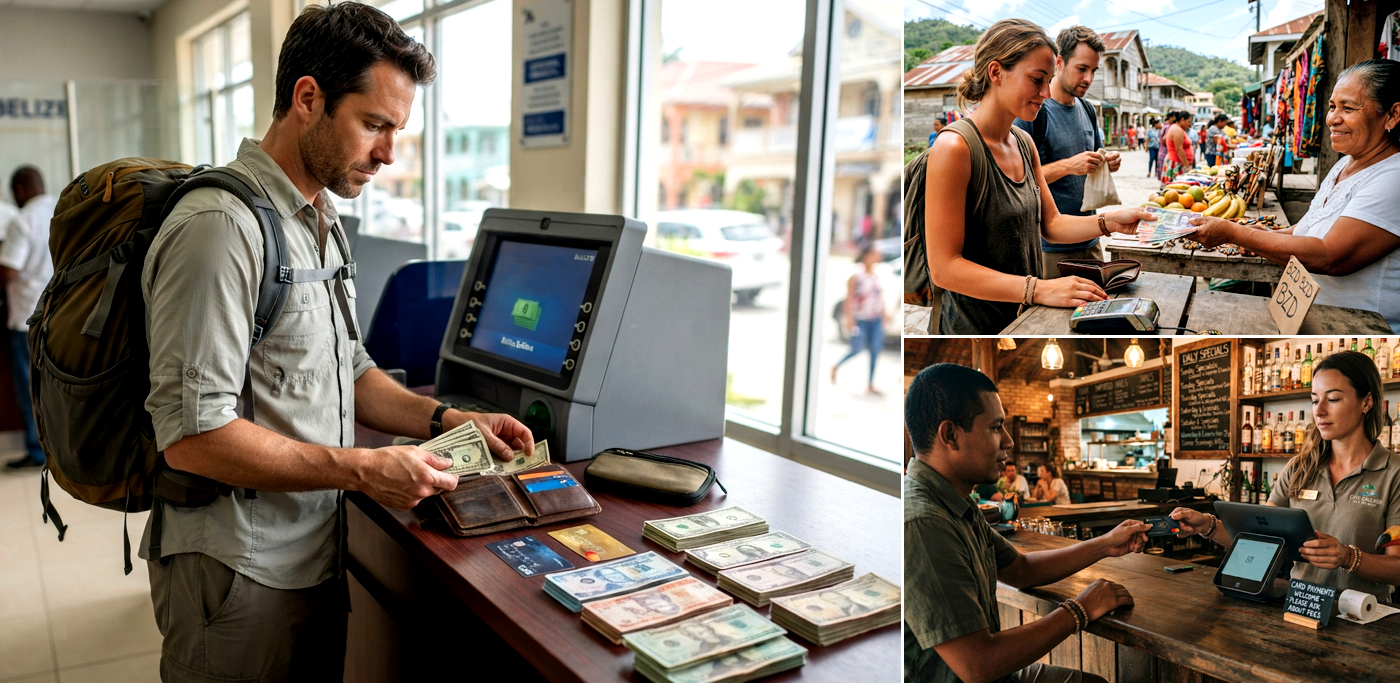
In Cayo and southern Belize, plan on cash for everyday spending and a card for lodging and prepaid tours. Foreign-card ATMs cluster in larger towns such as San Ignacio, Dangriga, Placencia and Punta Gorda, so withdraw before you head to villages, lodges or trails. The US State Department says some businesses add a card fee and some ATMs charge high fees, so carry more small notes than feels necessary.
Area | Cash points to know | What to carry |
|---|---|---|
San Ignacio and Cayo | Frommer’s lists San Ignacio among towns with internationally accessible ATMs. Belize Bank lists a San Ignacio branch on Burns Avenue, open Monday–Friday 8:00–3:00. | Cash for markets, buses, taxis and tips; a card for lodging and tours booked ahead. |
Belmopan | Also on Frommer’s list. | A useful top-up stop on the way south. |
Dangriga and Hopkins | Dangriga is listed. One local guide lists Hopkins; others do not, so do not rely on it. | Cash for village meals, craft purchases and drumming visits. |
Placencia | Listed by Frommer’s. | Cash for casual meals and boat-captain tips; a card for lodging. |
Punta Gorda and Toledo | Punta Gorda is listed; Belize Bank lists a branch at 30 George Street, open Monday–Friday 8:00–3:00. | Plenty of cash before visiting villages or community-run tours. |
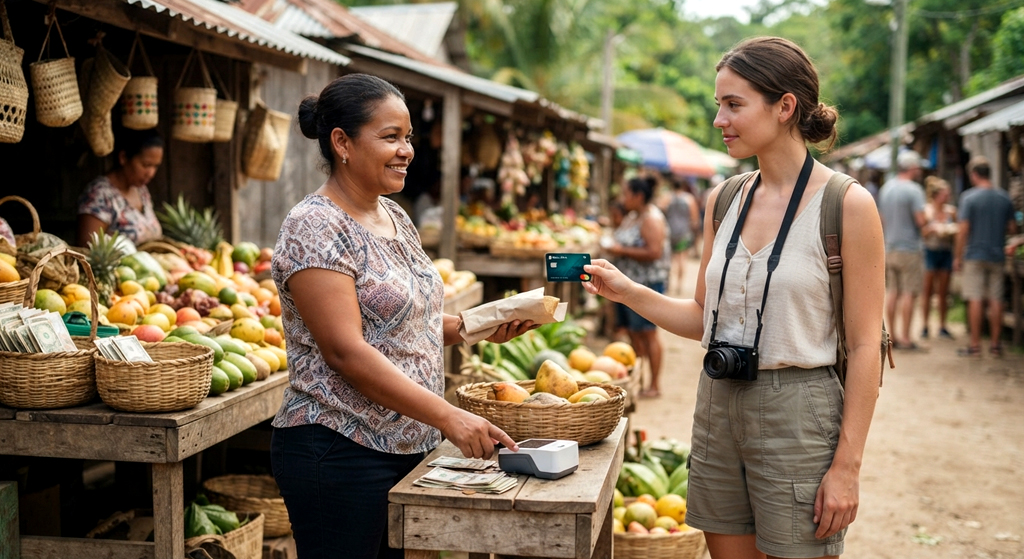
The State Department says most establishments accept cards, but some add a charge for using them. A local travel guide describes Belize as primarily a cash society where many small shops and restaurants do not take cards, and another published guide cites surcharges of 2–5%. Those figures are not official, so ask before you pay.
For the island side of the story, see our cash vs card guide and how the 2:1 rate works.
Belize’s banks and your own bank both set terms. Published travel guides describe a fixed fee per withdrawal plus a percentage, and daily caps in the hundreds to low thousands of Belize dollars. Treat those as prompts to ask, not promises. The State Department only says that some ATMs may charge high fees.
Tipping is customary rather than required. Local guidance generally puts tour guides near 10% of the tour price and restaurants at 5–15% where no service charge is added. Our upcoming tipping guide sets out the ranges. Carry small notes, because few guides and drivers have change for large ones.
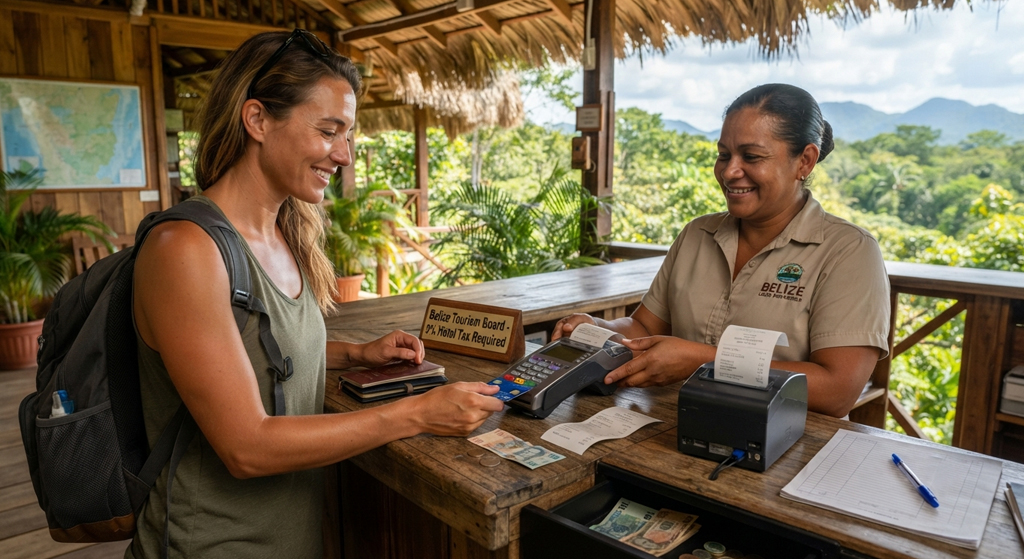
Ask three questions up front: which currency the price is quoted in, whether it includes the 9% accommodation tax and any service charge, and whether a deposit or the balance can go on a card. The Belize Tourism Board says hotels must collect the 9% tax from each guest, and full-service lodges often add a service charge, so the sticker price and the final bill can differ noticeably. Prepaying by card moves your highest costs out of the cash plan and leaves only the daily layer.
Where a village guesthouse or community-run tour takes only cash, ask for the amount in advance so you can withdraw it in town.
Write your own amounts against each line, multiply by the days until the next town with a bank, and add the buffer.
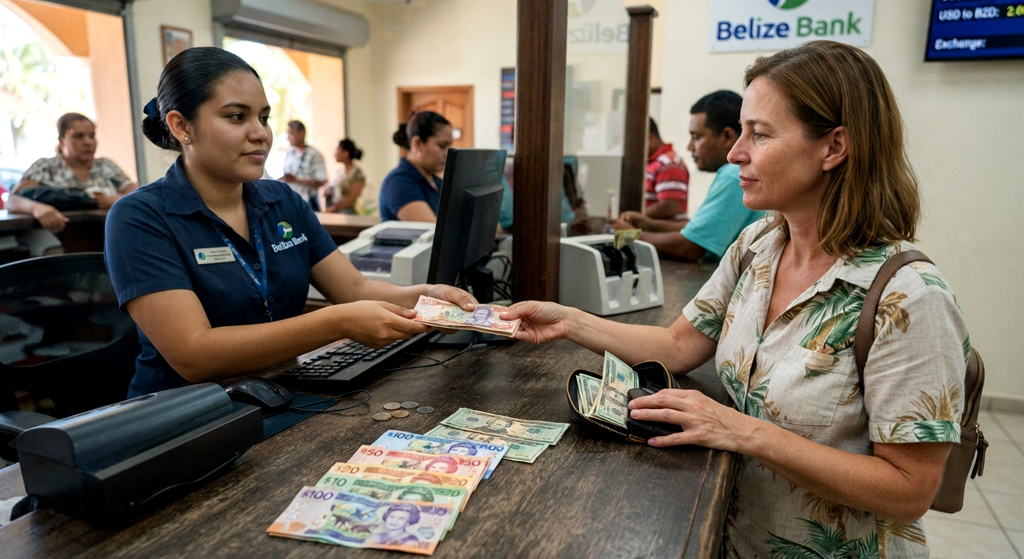
Frommer’s notes that credit card cash advances are available at banks and ATMs but that high fees make them a pricey way to get cash, and that your own bank may add its own fee. Because the Belize dollar is fixed at two to the US dollar, exchanging is rarely necessary on a short stay. Pay in whichever currency the price is quoted and check the change you receive.
Is there an ATM in San Ignacio?
Yes. Frommer’s lists San Ignacio among towns with internationally accessible ATMs, and Belize Bank lists a Burns Avenue branch there.
Do Belize tours take credit cards?
Many prepaid tours do, but small and community-run operators may not. Ask when you book, and ask about surcharges.
Can I use US dollars?
Often, at the fixed two-to-one rate, but change may come back in Belize dollars and worn notes may be refused.
The money rule for the mainland is simple: decide the cash you will need before you leave a town with a bank. Before your next drive, add up tomorrow’s lodging balance, tours, meals and tips against what is in your wallet. Then read the upcoming tipping guide so the notes you carry are the right size.